DIHR
DIHR Dishwasher Solutions for Professional Kitchens
A DIHR dishwasher provides professional warewashing capacity for restaurants, hotels, cafes, catering operations, bars, bakeries, and commercial kitchens. DIHR specializes in professional dishwashing equipment with solutions designed for different volumes, kitchen layouts, and types of tableware.
At Kawader Store, businesses in Saudi Arabia can explore DIHR commercial dishwashers and select equipment according to basket size, washing capacity, cycle requirements, installation space, and daily workload. Different configurations are available for businesses ranging from compact foodservice operations to high-volume restaurant and hotel kitchens.
Models such as the DIHR GS 50 and DIHR HT 11 represent different approaches to professional warewashing. Understanding the differences between undercounter and hood-type equipment can help businesses choose a machine that matches their workflow rather than selecting solely according to physical size.
Professional DIHR Commercial Dishwashers
Commercial dishwashing differs significantly from domestic washing because professional kitchens may need to process large quantities of plates, glasses, cutlery, trays, and utensils throughout the working day. A suitable DIHR dishwasher should therefore be selected according to peak washing demand and not simply the total number of covers served each day.
DIHR develops multiple professional warewashing formats, including undercounter dishwashers, hood-type machines, glasswashers, pot washers, and larger systems for higher-volume applications. Each format is designed around a different type of workflow and production requirement.
Before purchasing, businesses should evaluate the size and type of items being washed, number of baskets required per hour, available installation area, water and electrical connections, and the relationship between the dishwashing area and the rest of the kitchen.
DIHR GS 50 Undercounter Dishwasher
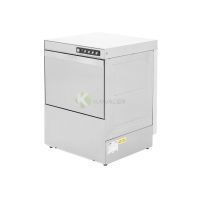
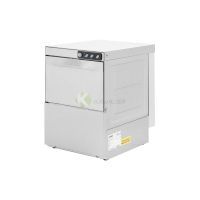
The DIHR GS 50 is an undercounter professional dishwasher format suitable for foodservice businesses that require commercial washing performance within a relatively compact installation area. Undercounter machines can be particularly useful in restaurants, cafes, bars, and other operations where floor space is limited or where the dishwasher needs to fit beneath a suitable work surface.
A 500 x 500 mm basket format is commonly associated with this class of professional dishwasher, providing space for standard restaurant tableware while maintaining a compact footprint. Businesses should always check the specifications of the exact DIHR GS 50 configuration offered before installation.
Who Is the DIHR GS 50 Suitable For?
The DIHR GS 50 can be considered by restaurants, cafes, and commercial foodservice operations looking for an undercounter washing solution. The practical suitability of the machine depends on the number of baskets that need to be processed during peak service and the type of tableware being washed.
Undercounter dishwashers can work particularly well where staff load and unload from the front and where the warewashing area does not require the throughput of a larger hood-type or conveyor system.
DIHR HT 11 Hood-Type Dishwasher
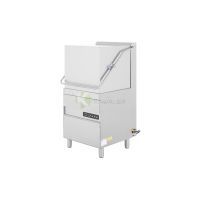
The DIHR HT 11 belongs to a different style of professional warewashing equipment. Hood-type dishwashers are designed around a pass-through workflow, where baskets can move through the washing area from a loading side toward a clean unloading side.
This configuration can be useful in busy restaurants, hotels, catering facilities, and other foodservice operations that need to process repeated baskets during peak periods. The hood design allows operators to raise the hood, move a basket into the washing area, complete the cycle, and continue the workflow.
When to Choose a DIHR HT 11
A DIHR HT 11 may be appropriate when an operation requires a higher-throughput dishwashing workflow and has sufficient space for a hood-type installation. The complete washing area should be planned around the machine, including space for dirty dish handling, pre-rinsing, basket loading, and clean dish unloading.
When evaluating the HT 11, check the exact model specifications, basket dimensions, washing cycles, electrical requirements, water connections, machine dimensions, and required working clearances.
DIHR GS 50 vs DIHR HT 11: Understanding the Difference
The DIHR GS 50 and DIHR HT 11 serve different professional kitchen layouts. The GS 50 uses an undercounter configuration, while the HT 11 uses a hood-type design that can form part of a pass-through dishwashing station.
An undercounter machine can be suitable where space is limited and washing volume is moderate. A hood-type system can support a workflow where baskets move through dedicated dirty and clean sides, which may be more practical for operations handling repeated dishwashing cycles during busy periods.
The appropriate choice should be based on required throughput, available space, staffing, tableware volume, and the physical design of the washing area. Neither format should be selected based only on external dimensions or machine capacity.
Choosing a DIHR Dishwasher by Washing Capacity
One of the most important considerations when buying a DIHR dishwasher is how much ware needs to be washed during the busiest part of service. Average daily volume alone may not accurately represent the capacity required.
For example, a restaurant may accumulate a large number of plates and utensils immediately after lunch or dinner service. The dishwasher needs sufficient cycle capacity to process this volume without creating a backlog that interferes with kitchen operations.
Estimate the number of baskets required during peak periods and compare this with the washing cycles and stated capacity of the selected machine. Also consider the time required for scraping, pre-rinsing, loading, unloading, and returning clean items to service.
Undercounter DIHR Dishwashers
Undercounter dishwashers provide a compact solution for commercial warewashing. Their front-loading configuration makes them suitable for installation beneath an appropriate counter or as a standalone unit within a dedicated washing area.
These machines can be useful in cafes, bars, smaller restaurants, satellite kitchens, and operations where tableware volume does not justify a larger pass-through installation. The DIHR GS 50 is an example of the type of DIHR equipment businesses may consider for this configuration.
Before installing an undercounter dishwasher, check the available width, depth, and height, as well as door clearance, water supply, drainage, and electrical requirements.
DIHR Hood-Type Dishwashers for Busy Kitchens
Hood-type machines can be integrated into a more structured warewashing line. Dirty dishes can be cleared and pre-rinsed before being placed in baskets, passed through the dishwasher, and moved toward a clean unloading area.
This approach can improve organization in kitchens with substantial dishwashing requirements. A model such as the DIHR HT 11 should therefore be evaluated not only as an individual machine but also as part of the complete dishwashing station.
Planning sufficient space around the dishwasher is important. In addition to the machine footprint, businesses may need pre-wash sinks, inlet and outlet tables, basket storage, waste handling, and areas for clean items.
Plan Your Warewashing Area Around Kitchen Workflow
An effective dishwashing area should help prevent unnecessary crossover between dirty and clean tableware. The workflow typically begins with collection and scraping, followed by pre-rinsing where required, machine washing, unloading, and clean storage.
Positioning equipment according to this sequence can help staff move baskets through the area more efficiently. The layout should also provide enough working space for employees without interfering with food preparation or cooking stations.
When installing a DIHR dishwasher, businesses should also account for water, drainage, electrical supply, ventilation requirements where applicable, and access for routine cleaning and maintenance.
What to Consider Before Buying a DIHR Dishwasher
The correct commercial dishwasher depends on several operational and technical factors. Reviewing these requirements before purchasing can help determine whether an undercounter, hood-type, or another DIHR configuration is appropriate.
- Peak washing volume: Calculate how many baskets need to be processed during the busiest service periods.
- Basket dimensions: Check that plates, glasses, utensils, and other items fit the basket format of the selected machine.
- Machine configuration: Compare undercounter and hood-type designs according to the available space and workflow.
- Cycle options: Review available washing cycles and select equipment appropriate for your operational requirements.
- Water connections: Confirm water supply, drainage, and any installation requirements specified for the model.
- Electrical specifications: Check voltage, phase, and power requirements before installation.
- External dimensions: Measure the complete installation area and allow space for loading, unloading, cleaning, and servicing.
- Daily cleaning: Consider how easily filters, wash areas, and other routinely cleaned components can be accessed.
DIHR Dishwashers for Restaurants
Restaurants need a warewashing system that matches both seating capacity and the way customers arrive throughout service. A restaurant serving a large number of guests within a short period can create much greater peak dishwashing demand than a business serving the same number of guests gradually throughout the day.
A compact DIHR dishwasher may suit an operation with moderate washing requirements, while a larger hood-type setup may be more appropriate where baskets need to move continuously through the washing area.
Restaurants should also consider the number of plates, glasses, cutlery sets, preparation utensils, and kitchen items in circulation. This provides a more complete picture of washing requirements than customer count alone.
DIHR Dishwashers for Hotels and Catering Operations
Hotels and catering facilities may need to process large quantities of tableware around breakfast, banquets, events, and restaurant service. Their dishwashing requirements can change considerably throughout the day, making peak capacity particularly important.
For these environments, the design of the entire washing area can be as important as the dishwasher itself. Staff movement, dirty-dish collection, pre-washing, basket handling, clean storage, and the selected machine should work as one system.
Models such as the DIHR HT 11 can be evaluated for operations that require a hood-type workflow, while other DIHR solutions may be more appropriate depending on the scale and type of facility.
Cleaning and Maintaining a DIHR Dishwasher
Routine cleaning and maintenance are important for professional warewashing equipment. Operators should follow the instructions provided for the specific DIHR model, including procedures for cleaning filters, wash areas, and removable components where applicable.
Water conditions can also affect commercial dishwashing equipment and final washing results. Businesses should review local water quality and any water-treatment recommendations relevant to the selected machine and installation.
Preventive servicing should be carried out according to the manufacturer's requirements and the intensity of use. High-volume kitchens may need to pay particular attention to routine inspections because their machines complete more cycles throughout the working day.
Shop DIHR Dishwashers in Saudi Arabia at Kawader
Kawader Store offers DIHR dishwasher solutions for restaurants, hotels, cafes, catering operations, and commercial kitchens in Saudi Arabia. Businesses can compare professional dishwashing equipment according to configuration, basket size, capacity, dimensions, technical specifications, and installation requirements.
Whether you are considering the DIHR GS 50, evaluating a DIHR HT 11, or comparing other professional warewashing options, start with the actual volume and workflow of your operation. Choosing equipment according to peak washing requirements can help create a more practical and organized dishwashing station.
Finding the Right DIHR Dishwasher for Your Business
What is a DIHR dishwasher?
A DIHR dishwasher is professional warewashing equipment designed for commercial foodservice environments. DIHR produces different dishwasher formats, including undercounter, hood-type, glasswashing, and other professional warewashing solutions for varying operational requirements.
What is the DIHR GS 50?
The DIHR GS 50 is an undercounter professional dishwasher configuration. This type of machine can be suitable for restaurants, cafes, and other foodservice operations requiring commercial dishwashing within a relatively compact footprint. Exact specifications should be checked for the model offered.
What is the DIHR HT 11?
The DIHR HT 11 is a hood-type professional dishwasher. Hood-type equipment is designed to integrate into a pass-through washing workflow and can be considered for restaurants, hotels, and commercial kitchens handling repeated baskets during busy service periods.
What is the difference between an undercounter and hood-type DIHR dishwasher?
An undercounter dishwasher such as the DIHR GS 50 uses a compact front-loading format, while a hood-type machine such as the DIHR HT 11 can be integrated into a pass-through dishwashing station. The suitable format depends on available space, peak washing volume, and workflow.
How do I choose the right DIHR dishwasher?
Calculate peak basket volume, identify the types and sizes of items being washed, measure the installation area, and check water, drainage, and electrical requirements. Then compare these requirements with the specifications and configuration of the available DIHR models.

DIHR Dishwasher Solutions for Professional Kitchens
A DIHR dishwasher provides professional warewashing capacity for restaurants, hotels, cafes, catering operations, bars, bakeries, and commercial kitchens. DIHR specializes in professional dishwashing equipment with solutions designed for different volumes, kitchen layouts, and types of tableware.
At Kawader Store, businesses in Saudi Arabia can explore DIHR commercial dishwashers and select equipment according to basket size, washing capacity, cycle requirements, installation space, and daily workload. Different configurations are available for businesses ranging from compact foodservice operations to high-volume restaurant and hotel kitchens.
Models such as the DIHR GS 50 and DIHR HT 11 represent different approaches to professional warewashing. Understanding the differences between undercounter and hood-type equipment can help businesses choose a machine that matches their workflow rather than selecting solely according to physical size.
Professional DIHR Commercial Dishwashers
Commercial dishwashing differs significantly from domestic washing because professional kitchens may need to process large quantities of plates, glasses, cutlery, trays, and utensils throughout the working day. A suitable DIHR dishwasher should therefore be selected according to peak washing demand and not simply the total number of covers served each day.
DIHR develops multiple professional warewashing formats, including undercounter dishwashers, hood-type machines, glasswashers, pot washers, and larger systems for higher-volume applications. Each format is designed around a different type of workflow and production requirement.
Before purchasing, businesses should evaluate the size and type of items being washed, number of baskets required per hour, available installation area, water and electrical connections, and the relationship between the dishwashing area and the rest of the kitchen.
DIHR GS 50 Undercounter Dishwasher
The DIHR GS 50 is an undercounter professional dishwasher format suitable for foodservice businesses that require commercial washing performance within a relatively compact installation area. Undercounter machines can be particularly useful in restaurants, cafes, bars, and other operations where floor space is limited or where the dishwasher needs to fit beneath a suitable work surface.
A 500 x 500 mm basket format is commonly associated with this class of professional dishwasher, providing space for standard restaurant tableware while maintaining a compact footprint. Businesses should always check the specifications of the exact DIHR GS 50 configuration offered before installation.
Who Is the DIHR GS 50 Suitable For?
The DIHR GS 50 can be considered by restaurants, cafes, and commercial foodservice operations looking for an undercounter washing solution. The practical suitability of the machine depends on the number of baskets that need to be processed during peak service and the type of tableware being washed.
Undercounter dishwashers can work particularly well where staff load and unload from the front and where the warewashing area does not require the throughput of a larger hood-type or conveyor system.
DIHR HT 11 Hood-Type Dishwasher
The DIHR HT 11 belongs to a different style of professional warewashing equipment. Hood-type dishwashers are designed around a pass-through workflow, where baskets can move through the washing area from a loading side toward a clean unloading side.
This configuration can be useful in busy restaurants, hotels, catering facilities, and other foodservice operations that need to process repeated baskets during peak periods. The hood design allows operators to raise the hood, move a basket into the washing area, complete the cycle, and continue the workflow.
When to Choose a DIHR HT 11
A DIHR HT 11 may be appropriate when an operation requires a higher-throughput dishwashing workflow and has sufficient space for a hood-type installation. The complete washing area should be planned around the machine, including space for dirty dish handling, pre-rinsing, basket loading, and clean dish unloading.
When evaluating the HT 11, check the exact model specifications, basket dimensions, washing cycles, electrical requirements, water connections, machine dimensions, and required working clearances.
DIHR GS 50 vs DIHR HT 11: Understanding the Difference
The DIHR GS 50 and DIHR HT 11 serve different professional kitchen layouts. The GS 50 uses an undercounter configuration, while the HT 11 uses a hood-type design that can form part of a pass-through dishwashing station.
An undercounter machine can be suitable where space is limited and washing volume is moderate. A hood-type system can support a workflow where baskets move through dedicated dirty and clean sides, which may be more practical for operations handling repeated dishwashing cycles during busy periods.
The appropriate choice should be based on required throughput, available space, staffing, tableware volume, and the physical design of the washing area. Neither format should be selected based only on external dimensions or machine capacity.
Choosing a DIHR Dishwasher by Washing Capacity
One of the most important considerations when buying a DIHR dishwasher is how much ware needs to be washed during the busiest part of service. Average daily volume alone may not accurately represent the capacity required.
For example, a restaurant may accumulate a large number of plates and utensils immediately after lunch or dinner service. The dishwasher needs sufficient cycle capacity to process this volume without creating a backlog that interferes with kitchen operations.
Estimate the number of baskets required during peak periods and compare this with the washing cycles and stated capacity of the selected machine. Also consider the time required for scraping, pre-rinsing, loading, unloading, and returning clean items to service.
Undercounter DIHR Dishwashers
Undercounter dishwashers provide a compact solution for commercial warewashing. Their front-loading configuration makes them suitable for installation beneath an appropriate counter or as a standalone unit within a dedicated washing area.
These machines can be useful in cafes, bars, smaller restaurants, satellite kitchens, and operations where tableware volume does not justify a larger pass-through installation. The DIHR GS 50 is an example of the type of DIHR equipment businesses may consider for this configuration.
Before installing an undercounter dishwasher, check the available width, depth, and height, as well as door clearance, water supply, drainage, and electrical requirements.
DIHR Hood-Type Dishwashers for Busy Kitchens
Hood-type machines can be integrated into a more structured warewashing line. Dirty dishes can be cleared and pre-rinsed before being placed in baskets, passed through the dishwasher, and moved toward a clean unloading area.
This approach can improve organization in kitchens with substantial dishwashing requirements. A model such as the DIHR HT 11 should therefore be evaluated not only as an individual machine but also as part of the complete dishwashing station.
Planning sufficient space around the dishwasher is important. In addition to the machine footprint, businesses may need pre-wash sinks, inlet and outlet tables, basket storage, waste handling, and areas for clean items.
Plan Your Warewashing Area Around Kitchen Workflow
An effective dishwashing area should help prevent unnecessary crossover between dirty and clean tableware. The workflow typically begins with collection and scraping, followed by pre-rinsing where required, machine washing, unloading, and clean storage.
Positioning equipment according to this sequence can help staff move baskets through the area more efficiently. The layout should also provide enough working space for employees without interfering with food preparation or cooking stations.
When installing a DIHR dishwasher, businesses should also account for water, drainage, electrical supply, ventilation requirements where applicable, and access for routine cleaning and maintenance.
What to Consider Before Buying a DIHR Dishwasher
The correct commercial dishwasher depends on several operational and technical factors. Reviewing these requirements before purchasing can help determine whether an undercounter, hood-type, or another DIHR configuration is appropriate.
- Peak washing volume: Calculate how many baskets need to be processed during the busiest service periods.
- Basket dimensions: Check that plates, glasses, utensils, and other items fit the basket format of the selected machine.
- Machine configuration: Compare undercounter and hood-type designs according to the available space and workflow.
- Cycle options: Review available washing cycles and select equipment appropriate for your operational requirements.
- Water connections: Confirm water supply, drainage, and any installation requirements specified for the model.
- Electrical specifications: Check voltage, phase, and power requirements before installation.
- External dimensions: Measure the complete installation area and allow space for loading, unloading, cleaning, and servicing.
- Daily cleaning: Consider how easily filters, wash areas, and other routinely cleaned components can be accessed.
DIHR Dishwashers for Restaurants
Restaurants need a warewashing system that matches both seating capacity and the way customers arrive throughout service. A restaurant serving a large number of guests within a short period can create much greater peak dishwashing demand than a business serving the same number of guests gradually throughout the day.
A compact DIHR dishwasher may suit an operation with moderate washing requirements, while a larger hood-type setup may be more appropriate where baskets need to move continuously through the washing area.
Restaurants should also consider the number of plates, glasses, cutlery sets, preparation utensils, and kitchen items in circulation. This provides a more complete picture of washing requirements than customer count alone.
DIHR Dishwashers for Hotels and Catering Operations
Hotels and catering facilities may need to process large quantities of tableware around breakfast, banquets, events, and restaurant service. Their dishwashing requirements can change considerably throughout the day, making peak capacity particularly important.
For these environments, the design of the entire washing area can be as important as the dishwasher itself. Staff movement, dirty-dish collection, pre-washing, basket handling, clean storage, and the selected machine should work as one system.
Models such as the DIHR HT 11 can be evaluated for operations that require a hood-type workflow, while other DIHR solutions may be more appropriate depending on the scale and type of facility.
Cleaning and Maintaining a DIHR Dishwasher
Routine cleaning and maintenance are important for professional warewashing equipment. Operators should follow the instructions provided for the specific DIHR model, including procedures for cleaning filters, wash areas, and removable components where applicable.
Water conditions can also affect commercial dishwashing equipment and final washing results. Businesses should review local water quality and any water-treatment recommendations relevant to the selected machine and installation.
Preventive servicing should be carried out according to the manufacturer's requirements and the intensity of use. High-volume kitchens may need to pay particular attention to routine inspections because their machines complete more cycles throughout the working day.
Shop DIHR Dishwashers in Saudi Arabia at Kawader
Kawader Store offers DIHR dishwasher solutions for restaurants, hotels, cafes, catering operations, and commercial kitchens in Saudi Arabia. Businesses can compare professional dishwashing equipment according to configuration, basket size, capacity, dimensions, technical specifications, and installation requirements.
Whether you are considering the DIHR GS 50, evaluating a DIHR HT 11, or comparing other professional warewashing options, start with the actual volume and workflow of your operation. Choosing equipment according to peak washing requirements can help create a more practical and organized dishwashing station.
Finding the Right DIHR Dishwasher for Your Business
What is a DIHR dishwasher?
A DIHR dishwasher is professional warewashing equipment designed for commercial foodservice environments. DIHR produces different dishwasher formats, including undercounter, hood-type, glasswashing, and other professional warewashing solutions for varying operational requirements.
What is the DIHR GS 50?
The DIHR GS 50 is an undercounter professional dishwasher configuration. This type of machine can be suitable for restaurants, cafes, and other foodservice operations requiring commercial dishwashing within a relatively compact footprint. Exact specifications should be checked for the model offered.
What is the DIHR HT 11?
The DIHR HT 11 is a hood-type professional dishwasher. Hood-type equipment is designed to integrate into a pass-through washing workflow and can be considered for restaurants, hotels, and commercial kitchens handling repeated baskets during busy service periods.
What is the difference between an undercounter and hood-type DIHR dishwasher?
An undercounter dishwasher such as the DIHR GS 50 uses a compact front-loading format, while a hood-type machine such as the DIHR HT 11 can be integrated into a pass-through dishwashing station. The suitable format depends on available space, peak washing volume, and workflow.
How do I choose the right DIHR dishwasher?
Calculate peak basket volume, identify the types and sizes of items being washed, measure the installation area, and check water, drainage, and electrical requirements. Then compare these requirements with the specifications and configuration of the available DIHR models.
-
 DIHRStainless Steel Dishwasher & Glasswasher – 14.5Lt From DIHRSpecial Price 7,301.93 Regular Price 8,590.50 Out of stock
 -
 DIHRStainless Steel Hood Type Dishwasher - 30L Tank Cap From DIHRSpecial Price 17,270.47 Regular Price 20,318.20 Out of stock
 -
 DIHRDigital Dish Washing Machine With Hood – 1800 Per Hour From DIHRSpecial Price 29,581.11 Regular Price 34,801.30 Out of stock