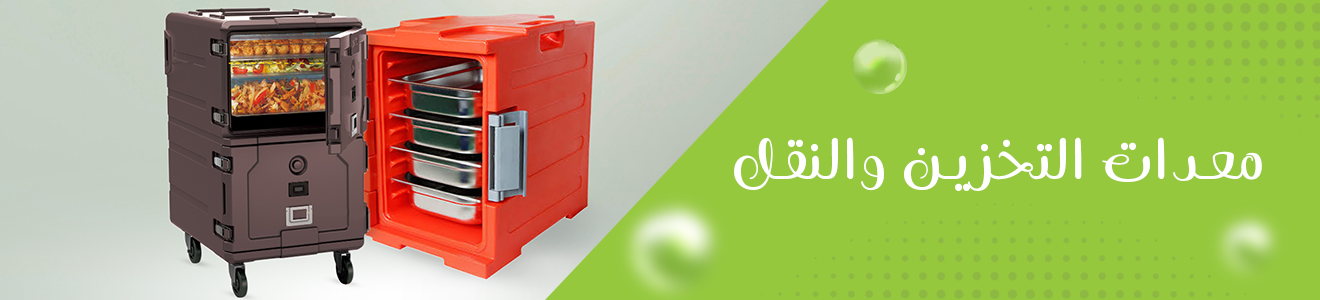
Storage and Transportation
Commercial Storage & Transportation Equipment for Restaurants & Hotels
Commercial storage and transportation equipment is essential for restaurants, hotels, cafés, central kitchens, catering companies, and professional foodservice operations. These products help organise ingredients and supplies, move items between workstations, and support the transportation of prepared food from production areas to final service locations.
Kawader offers a variety of commercial storage and transport solutions across Saudi Arabia, including storage and waste bins, food storage and transport equipment, and commercial carts, trucks and dollies for different kitchen and hospitality applications.
Types of Commercial Storage & Transport Equipment
Storage Containers & Waste Bins
Commercial storage containers are used to organise tools, ingredients, materials, and operating supplies, while waste bins provide dedicated collection points throughout preparation, washing, storage, and service areas.
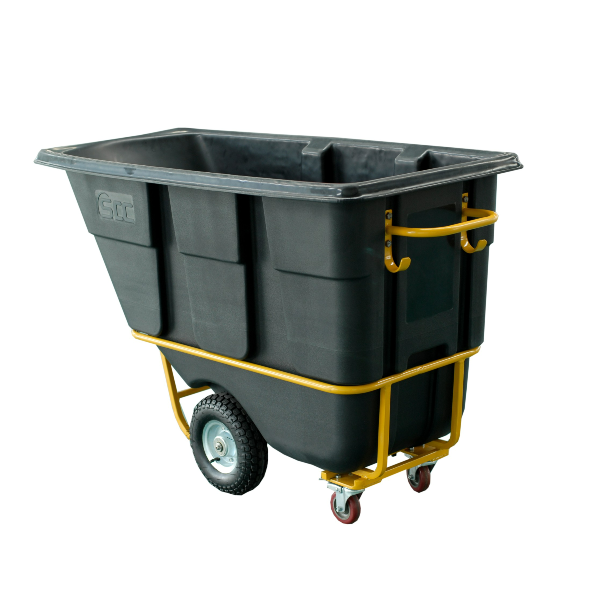
Kawader's commercial storage and waste bin range includes different capacities and configurations, such as stainless steel waste bins, utility boxes, and selected mobile containers equipped with wheels or lids.
The correct size should be selected according to daily usage and installation location. Food storage containers and waste collection bins must also remain clearly separated within the kitchen workflow.
Commercial Food Storage & Transport
Restaurants, hotels, and catering businesses often need to move food between kitchens and service points or transport prepared products between different operating locations.
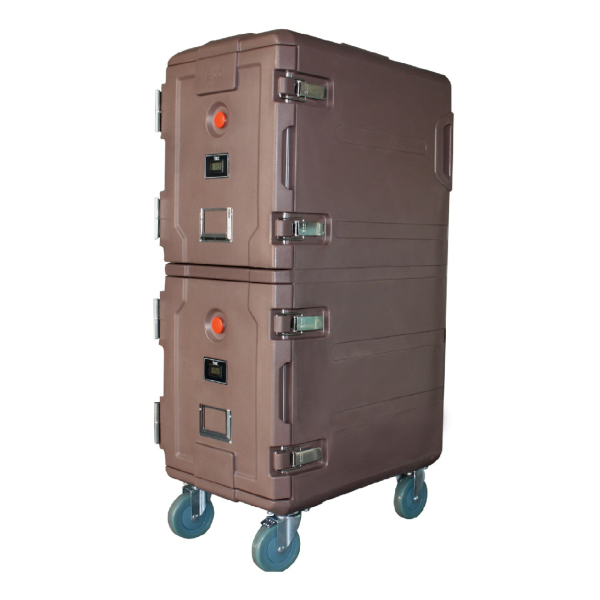
Commercial food storage and transport equipment includes insulated carriers, transport boxes, mobile food containers, and other solutions that support more organised handling during transportation.
These products are particularly relevant to catering businesses, banquet operations, central kitchens, and hotels that prepare food in one location before moving it to another service area.
Insulated Food Carriers
Insulated food carriers help reduce the effect of surrounding temperature changes during transportation. They are useful when prepared meals or food containers need to move between different service locations.
Insulation alone does not replace proper time and temperature management, so businesses should select equipment according to food type, expected transportation duration, and manufacturer instructions.
Commercial Carts & Trolleys
Commercial carts and trolleys allow kitchens to move trays, containers, supplies, and other items without carrying each piece individually.
Different configurations include tray rack trolleys, multi-level service carts, loading platforms, and transport units equipped with handles and castor wheels.
Important selection factors include maximum load capacity, number of shelves, external dimensions, wheel quality, and compatibility with the corridors, doors, and service lifts used in the facility.
Display Containers & Service Organisation
Storage requirements extend beyond back-of-house areas. Some restaurants, hotels, and catering businesses also need containers and display solutions to organise products at buffets, service counters, and preparation stations.
These products should be selected according to the items displayed, accessibility, cleaning requirements, and compatibility with the surrounding service equipment.
How to Choose Commercial Storage Equipment
Start by dividing your operational requirements into three categories: storing ingredients and materials, transporting prepared food, and moving equipment or operating supplies.
This distinction helps businesses select purpose-built products rather than relying on one type of container for every application.
Next, calculate the daily volume handled, transport distance, and number of movements during peak operating periods. A small restaurant may only require several containers and a service trolley, while a central kitchen may need a larger system of insulated carriers and mobile transport equipment.
Dimensions, construction materials, cleaning accessibility, load capacity, and stacking options should also be considered where applicable.
Food Storage vs Food Transportation
Food storage focuses on keeping products organised within a designated area, while food transportation requires equipment that supports practical movement and suitable handling conditions.
For example, a stationary container may be appropriate for organising ingredients inside a storeroom, while transporting prepared meals to a banquet hall may require an insulated carrier or larger mobile cabinet.
Businesses should also distinguish between general-purpose containers and products specifically suitable for direct food contact, checking individual product specifications before use.
Storage & Transportation for Central Kitchens
Central kitchens depend on regular movement between receiving, storage, preparation, cooking, and packaging areas.
Storage and transport equipment can work alongside commercial food preparation equipment to support a structured flow of ingredients between production stages.
Suitable containers can then be used to move products into packaging, holding, or service areas, while maintaining appropriate separation between raw ingredients and ready-to-eat food.
Integrate Transportation with Refrigeration
Some ingredients need to move between preparation stations and commercial refrigeration equipment. Containers should therefore be selected according to food type and required storage conditions.
Insulated transport boxes should not be treated as permanent substitutes for refrigerators or freezers. Refrigeration equipment provides the controlled storage environment, while suitable carriers support the transportation stage according to their specifications.
Connect Cooking, Holding & Final Service
Hotels and catering businesses can use food carriers and trolleys to move prepared products from commercial cooking equipment to service areas, particularly where kitchens and dining locations are separated by longer distances.
Transport systems can also be integrated with commercial warming and holding equipment when prepared food needs to remain ready for hot service between cooking and presentation.
Improve Kitchen Storage Organisation
Storage containers can be combined with commercial stainless steel shelving to organise tools, supplies, and suitable containers in storerooms and preparation areas.
Stainless steel cabinets provide enclosed storage where required, while commercial work tables can provide dedicated surfaces for sorting products and preparing containers before transportation.
Key Features Before Buying Storage & Transportation Equipment
- Primary application: storage, transportation, or display.
- Suitability for direct food contact where required.
- Internal capacity and external dimensions.
- Construction material.
- Thermal insulation where applicable.
- Maximum trolley or platform load capacity.
- Number of shelves or loading levels.
- Wheel configuration and braking system.
- Loading and unloading accessibility.
- Cleaning and maintenance requirements.
- Compatibility with facility doors and corridors.
- Compatibility with existing trays and containers.
Who Uses Commercial Storage & Transportation Equipment?
- Restaurants.
- Hotels and resorts.
- Cafés and coffee shops.
- Central kitchens.
- Catering and hospitality companies.
- Bakeries and pastry shops.
- Banquet and event venues.
- Hospitals and institutional kitchens.
- Food storage facilities.
- Meal preparation and delivery businesses.
Why Choose Storage & Transport Equipment from Kawader?
Kawader supplies commercial storage and transportation solutions for restaurants, hotels, and professional kitchens across Saudi Arabia, including storage bins, waste containers, insulated food carriers, carts, and trolleys in different sizes and configurations.
The range allows foodservice businesses to select equipment according to product type, operating volume, and internal movement requirements.
Kawader also provides complementary preparation, refrigeration, cooking, shelving, work table, and cabinet solutions, helping businesses create coordinated storage and service workflows.
Frequently Asked Questions
What storage and transport equipment does a restaurant need?
Requirements vary according to business size, but common products include storage bins, waste containers, food carriers, service carts, and trolleys for moving equipment and supplies.
What is the difference between a storage box and an insulated carrier?
A general storage box organises its contents, while an insulated carrier is designed to reduce heat transfer between the contents and surrounding environment during its intended use.
How do I choose the right food transport trolley?
Consider the products being moved, required load capacity, trolley dimensions, shelf configuration, wheel design, and the transport route inside the facility.
Can an insulated food carrier replace a refrigerator?
No. Insulated carriers support their specified transport or holding applications and do not replace refrigeration when continuous temperature control is required.
When should a business use tray rack trolleys?
They are useful for bakeries and kitchens that need to organise and transport several trays between preparation, cooking, cooling, and storage areas.
Are food transport solutions available for central kitchens and catering?
Yes. Insulated carriers, food transport boxes, and mobile cabinets can support larger operations. The right equipment depends on production volume, food type, and transport duration.
Can Kawader supply a complete storage and transportation system?
Yes. Storage containers, insulated carriers, carts, trolleys, and stainless steel storage equipment can be combined to support an organised workflow from receiving through preparation and final service.