


Safe Shopping
Your Data Is Safe With Us.
 Explore Brema ice makers at Kawader Store. Compare commercial ice machines, production capacities, specifications, and prices for restaurants and cafés in KSA.

Your Data Is Safe With Us.
At The Best Prices
Excellent Services

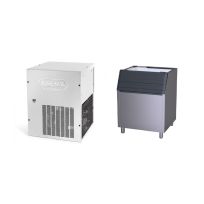
The Brema ice maker with 200kg daily production capacity is designed for restaurants, cafés, hotels, juice shops, catering businesses, central kitchens, and other commercial operations that require a substantial and consistent supply of ice. The modular system combines a high-output ice-making head with a separate storage bin, providing a practical solution for professional beverage and foodservice operations.
This Brema modular ice machine produces up to 200kg of crystal ice cubes every 24 hours and is paired with a 200kg storage bin. It produces small 7g ice cubes using a vertical evaporator system and features stainless steel construction suitable for professional environments.
For businesses comparing Brema ice maker price in Saudi Arabia, production capacity should be considered together with storage capacity, cube type, electrical requirements, installation space, and expected peak-hour ice consumption.
A commercial Brema ice maker is designed for operations where ice is an essential part of daily service rather than an occasional requirement. Restaurants and cafés can use commercial ice for cold beverages, while hotels may require significant quantities across restaurants, breakfast areas, banquets, bars, and other food and beverage outlets.
The 200kg modular configuration provides substantially greater production capacity than smaller self-contained machines intended for lower-volume businesses.
Choosing this capacity should therefore be based on actual daily consumption and peak demand rather than selecting the largest machine that fits the available space.
The Brema VM 500A provides ice production of up to 200kg per 24 hours. This capacity makes it suitable for commercial businesses with relatively high ice consumption throughout the working day.
Daily production capacity describes how much ice the machine can produce under specified operating conditions over a 24-hour period. It should not be confused with the amount of ice immediately available at any particular moment.
This is why storage capacity is also important when designing a commercial ice system.
This modular Brema ice maker is paired with a separate storage bin offering 200kg of ice storage capacity.
A large storage bin allows the system to accumulate produced ice so it can be available when demand increases. This can be particularly useful when ice consumption is concentrated around lunch, dinner, events, or other peak service periods.
Businesses should evaluate production and storage separately. The ice maker produces ice over time, while the bin determines how much produced ice can be held for service.
A modular ice machine separates the ice-producing unit from the storage bin. The ice maker is installed above a compatible storage bin, allowing businesses to create an ice system around the required production and storage capacity.
This differs from a self-contained ice maker, where the ice production system and smaller storage compartment are integrated into one cabinet.
Modular systems are particularly relevant to high-volume foodservice operations because they can combine substantial daily production with dedicated ice storage.
The Brema VM 500A is the ice-producing component in this commercial configuration. It is designed to produce small crystal ice cubes and is combined with the BIN200 storage solution.
The machine uses a vertical evaporator system and is built for commercial ice production in foodservice environments.
Businesses considering this model should plan the complete system, including the machine, storage bin, water supply, drainage, electrical connection, ventilation, and access for cleaning and maintenance.
The Brema ice maker produces small crystal ice cubes weighing approximately 7 grams each. This cube format is suitable for a range of commercial beverage applications.
Small cubes can be used for soft drinks, juices, water, mocktails, iced beverages, and other suitable cold drinks according to the requirements of the operation.
Ice type should always be considered before purchasing because different businesses may require cubes, flakes, pebbles, or other forms of ice.
Restaurants can consume substantial quantities of ice across beverage preparation and service. A high-output Brema ice maker can support operations where cold drinks are served continuously throughout lunch and dinner periods.
When calculating the required capacity, restaurants should include all areas that use ice rather than considering one beverage station alone.
The storage bin should also be positioned so staff can access ice efficiently without creating unnecessary movement through the kitchen or beverage preparation area.
Cafés serving iced coffee, cold brew, iced tea, juices, and other cold beverages can experience substantial ice demand, particularly during warmer periods.
A 200kg commercial machine can be appropriate for higher-volume cafés or beverage businesses where ice consumption is significantly greater than the capacity of a compact self-contained unit.
The machine should be sized according to actual beverage sales, average ice quantity per drink, and peak-hour demand.
Juice shops can use ice across fresh juices, blended beverages, mocktails, chilled drinks, and other menu applications. Businesses with multiple beverage preparation stations may consume large quantities during busy periods.
A modular Brema ice maker provides production and storage in a configuration designed for commercial demand.
The ice storage location should be coordinated with juicers, blenders, beverage dispensers, preparation counters, and other frequently used equipment.
Hotels can require ice across several food and beverage departments. Restaurants, cafés, banquets, room service, events, and other outlets can all contribute to total consumption.
For this reason, hotel ice requirements should be calculated at property level or by individual service area before equipment is selected.
A 200kg modular system can support a substantial volume, while larger properties may require several machines or higher production capacities depending on total demand.
Catering companies may require significant quantities of ice during events, particularly when serving chilled beverages to large numbers of guests.
Production planning is important because the machine creates ice progressively. The 200kg storage bin allows ice to accumulate before a high-demand service period.
Businesses should consider event schedules when planning when the machine will produce and store ice before service begins.
Central kitchens supplying several foodservice outlets may use a centralized ice production system where appropriate for their operation.
A commercial Brema ice maker with high production and storage capacity can be incorporated into such a facility, provided that ice handling and distribution procedures are planned correctly.
Total requirements should include all departments or branches receiving ice from the production location.
Brema ice maker price varies according to production capacity, ice type, storage configuration, cooling system, electrical specifications, and the individual machine model.
A compact self-contained Brema machine producing a smaller quantity of ice should not be compared directly with a 200kg modular system that includes a large separate storage bin.
Businesses should therefore compare prices between machines designed to meet similar production and storage requirements.
Production capacity is one of the primary factors influencing Brema ice maker price. Brema offers commercial machines across different production ranges, from smaller units for moderate requirements to modular machines producing hundreds of kilograms per day.
Storage is another important factor. A modular machine paired with a high-capacity bin represents a different equipment configuration from a self-contained machine with limited internal storage.
Ice type, electrical power, refrigeration design, dimensions, construction, and other technical specifications should also be considered when comparing current prices.
Businesses researching Brema ice maker price should first determine the production range they actually need. Comparing a 200kg machine with a much smaller model based on purchase price alone does not account for the difference in output.
A useful comparison can calculate the required kilograms of ice per day, required storage, and the type of ice needed before reviewing suitable machines within that range.
This helps businesses avoid purchasing equipment that is inexpensive initially but unable to supply sufficient ice during busy service.
Brema modular ice machines are available in different production capacities. A 200kg model can support substantial commercial demand, while higher-output machines can be selected for businesses requiring more daily production.
The correct choice should be based on measured or estimated ice consumption. A restaurant using approximately 100kg of ice per day has a different requirement from a hotel operation consuming several hundred kilograms.
Additional capacity can provide operational flexibility, but significantly oversizing a machine can increase equipment and installation requirements unnecessarily.
A self-contained ice maker combines production and storage in one unit and can be practical for operations with moderate ice requirements and limited installation space.
A modular Brema ice maker separates the production head from the bin. This configuration allows higher-output machines to work with larger storage capacities.
For a restaurant, hotel, or high-volume beverage operation, the modular format can be particularly useful when peak demand requires a large quantity of stored ice.
The Brema modular ice maker features stainless steel construction suited to professional foodservice environments.
The material provides a professional finish that integrates with other commercial kitchen and beverage equipment.
External and accessible internal areas should be cleaned according to the manufacturer's instructions and incorporated into the operation's regular equipment cleaning program.
The complete machine and storage-bin configuration creates a floor-standing commercial ice production system. Businesses need to allocate sufficient floor space for both components rather than planning around the ice-making head alone.
The machine dimensions are approximately 770 mm wide, 550 mm deep, and 805 mm high. The separate storage bin measures approximately 870 mm wide, 815 mm deep, and 1000 mm high.
Installation planning should consider the assembled configuration and required service access.
The Brema ice maker operates on a 220V, 60Hz, single-phase electrical supply with listed power of 1600W.
The available electrical connection should be verified before installation. This is particularly important in new restaurant or hotel projects where several high-demand appliances are being installed simultaneously.
Electrical installation should follow the manufacturer's requirements and applicable installation standards.
A commercial ice maker requires a suitable water supply because water is the raw material used to produce every batch of ice.
Water connection requirements should be planned before installation, with the machine positioned where appropriate water and drainage services are available.
Water quality can also affect ice appearance and machine operation, making appropriate filtration and water treatment important where required.
Drainage should be included when planning the installation area for the ice maker and storage bin. Commercial ice systems involve water during production, cleaning, and melting within the storage environment.
The exact drain configuration should follow Brema installation instructions and site requirements.
Planning drainage before equipment delivery can prevent the need for unnecessary plumbing modifications later.
The machine requires appropriate installation clearances and ventilation according to the manufacturer's specifications.
Businesses should avoid fitting a commercial ice maker into a space that prevents the refrigeration system from operating or makes routine maintenance difficult.
The installation area should provide access for cleaning, servicing, water connections, drainage, and electrical components.
Choosing a Brema ice maker begins with calculating actual ice consumption. Businesses should estimate how much ice is used per beverage or service application and multiply this by expected daily volume.
Peak demand should then be considered separately. A restaurant may use most of its daily ice within several busy hours rather than evenly across the full day.
The combination of 200kg production and 200kg storage can help manage this difference between gradual production and concentrated consumption.
An ice maker does not necessarily produce ice at the same rate at which customers consume it during peak periods. A storage bin allows production to accumulate before demand increases.
This is why daily production capacity and storage capacity should always be reviewed together.
The 200kg storage bin paired with this Brema system provides substantial holding capacity for high-volume commercial service.
A commercial ice station can include the Brema ice maker, storage bin, ice scoops, beverage equipment, and additional handling or dispensing equipment according to the operation.
The ice system should be positioned close enough to beverage production to reduce staff movement without interfering with food preparation or service routes.
For large restaurants, businesses may also consider whether secondary ice storage or dispensing points are required in other areas.
Cafés should coordinate ice production with espresso machines, blenders, cold beverage dispensers, juice equipment, and refrigerated preparation areas.
A high-output ice maker is most useful when the surrounding beverage station can handle similar service volume.
Businesses should therefore plan the entire beverage workflow rather than sizing the ice machine independently.
Cold beverage menus can create significant ice consumption. Iced coffee, iced tea, juices, soft drinks, mocktails, and other cold beverages can each require ice during preparation or service.
The small crystal cubes produced by this Brema ice maker can support a variety of commercial beverage applications.
Businesses should calculate average ice quantity per drink to estimate how many servings can be supported by the planned daily production.
Peak demand is often more important than average consumption. A restaurant may use a large percentage of its ice during lunch and dinner, while a café can experience a concentrated rush during afternoon cold-beverage service.
Large storage capacity helps businesses prepare for these periods by accumulating ice before service begins.
Operators should monitor actual usage after installation and adjust production and storage procedures accordingly.
Regular cleaning is important for commercial ice equipment because ice is a food product. The machine and storage bin should be cleaned and maintained according to Brema instructions.
Staff should follow the recommended procedures for accessible food-contact surfaces and other components requiring routine cleaning.
The area surrounding the machine should also be kept clean and dry as part of the kitchen or beverage station's hygiene program.
The 200kg storage bin should be incorporated into the regular cleaning schedule rather than focusing only on the ice-producing machine.
Ice should be handled using suitable clean equipment, and the bin interior should be maintained according to manufacturer instructions.
Good handling practices help protect the quality of stored ice between production and service.
Routine inspection can help identify changes in ice production, cube formation, refrigeration performance, or other operating characteristics.
Water and air systems should be maintained according to the manufacturer's instructions, and any required filters should be inspected or serviced at appropriate intervals.
If production falls unexpectedly or the machine develops a technical problem, qualified servicing should be arranged rather than continuing operation without identifying the cause.
The main specifications of this 200kg modular Brema system include:
Before purchasing, businesses should calculate average and peak ice consumption. A 200kg machine can provide substantial commercial production, but capacity should always be matched to the individual operation.
Smaller restaurants and cafés may require a lower-capacity machine, while large hotels, central kitchens, and high-volume beverage businesses may require 400kg or more per day.
Comparing the appropriate capacity range also makes a Brema ice maker price comparison more meaningful because machines with very different outputs are not direct alternatives.
The Brema VM 500A modular system provides up to 200kg of ice production per 24 hours and is paired with a 200kg storage bin, making it suitable for restaurants, cafés, hotels, juice shops, catering businesses, and commercial kitchens requiring a dependable high-volume ice supply.
The machine produces small 7g crystal ice cubes and features a stainless steel commercial design with a vertical evaporator system. Its modular configuration separates ice production from storage, providing substantial capacity for peak service periods.
Businesses comparing Brema ice maker price in Saudi Arabia should evaluate this model according to its 200kg daily production, 200kg storage capacity, ice cube format, electrical requirements, dimensions, and installation requirements rather than comparing purchase price alone.
This Brema ice maker produces up to 200kg of ice per 24 hours under the specified operating conditions. It is designed for commercial businesses requiring a relatively high daily supply of ice.
The modular system is paired with a separate bin providing 200kg of storage capacity. This allows produced ice to accumulate before peak service periods.
The machine produces small crystal ice cubes weighing approximately 7 grams each, suitable for a range of commercial cold beverage applications.
Brema ice maker price varies according to daily production capacity, storage configuration, ice type, cooling and refrigeration specifications, electrical requirements, and the individual model. Prices should therefore be compared between machines with similar production requirements.
A self-contained machine can suit businesses with moderate demand and limited space because production and storage are integrated into one unit. A modular Brema ice maker with a separate bin is generally more relevant when higher production and larger ice storage capacity are required.
| Product Name | 200kg Modular Ice Maker with Storage Bin from Brema |
|---|---|
| Brand | Brema |
| Origin | Italy |
| Material | Stainless Steel |
| Position | Floor Standing |
| Power Source | Electric |
| Voltage | 220 |
| Phase | 1 |
| Width (MM) | 770 |
| Depth (MM) | 550 |
| Height (MM) | 805 |
| Approx. Weight (KGs) | 90.00 Kg |
| Business Type | Restaurants, Hotels And Commercial Kitchens |