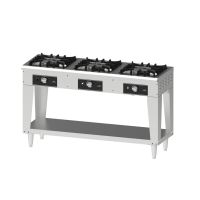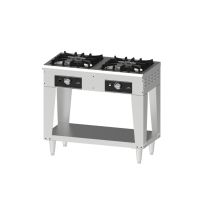
Gas Ranges
Gas Cooker Burner & Commercial Gas Ranges for Restaurants
A professional gas cooker burner provides restaurants, hotels, catering businesses, and commercial kitchens with the high-output cooking capacity required for daily food production. Commercial gas ranges allow chefs to boil, simmer, sauté, fry, and cook multiple dishes simultaneously, making the range one of the central pieces of equipment in many professional cooking lines.
At Kawader, commercial gas range options include different burner configurations and equipment formats for foodservice businesses in Saudi Arabia. Depending on the model, businesses can choose configurations with multiple open burners, integrated ovens, griddles, or combinations of different cooking surfaces.
Selecting the correct commercial gas cooker requires more than choosing the largest number of burners. Restaurants should consider peak-hour production, pan sizes, burner output, oven requirements, available cooking-line space, gas infrastructure, ventilation, and the number of chefs working at the station.
Commercial Gas Cooker Burner for Professional Kitchens
A commercial gas cooker burner is designed for a substantially different workload from a domestic cooking stove. Restaurant kitchens may operate burners repeatedly throughout lunch and dinner service while preparing several menu items at the same time.
Commercial ranges therefore focus on practical cooking capacity, durable construction, accessible controls, and configurations that integrate with a professional cooking line.
The appropriate burner configuration depends on the menu. A restaurant preparing sauces, soups, pasta, sautéed dishes, stocks, and pan-cooked items simultaneously may require considerably more burner capacity than an operation with a limited menu.
Commercial Gas Range for Restaurants
A commercial gas range creates a flexible cooking station because individual burners can support different pots and pans at the same time. Chefs can use one burner for simmering while another is used for boiling or higher-intensity cooking.
This flexibility makes gas ranges suitable for à la carte restaurants, hotels, catering kitchens, central kitchens, casual dining concepts, and many other professional foodservice environments.
When designing a new restaurant, burner capacity should be calculated according to the busiest service period rather than average daily production.
Restaurant Gas Range for High-Volume Cooking
A restaurant gas range should provide enough cooking positions to prevent the range from becoming a bottleneck during peak service. If chefs regularly wait for an available burner, the kitchen may require additional burner capacity or a different cooking-line configuration.
However, installing more burners than the menu requires can occupy valuable kitchen space that could otherwise be allocated to fryers, griddles, pasta cookers, ovens, preparation equipment, or work surfaces.
The objective is therefore to balance cooking capacity with actual production requirements.
4 Burner Gas Range
A 4 burner gas range can provide a practical cooking platform for small and medium restaurants or for a dedicated cooking station within a larger kitchen.
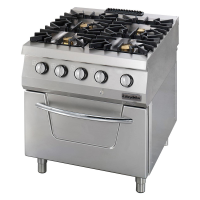
Kawader's range includes commercial four-burner configurations from Piokit, including stainless steel floor-standing models with independent manual burner controls and heavy-duty cast-iron top grates.
Some four-burner models also integrate an oven below the cooking surface, allowing the same equipment footprint to provide both open-burner and oven cooking capacity.
6 Burner Gas Range
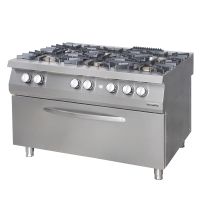
A 6 burner gas range provides additional simultaneous cooking positions for restaurants with broader menus or higher peak-hour demand.
Six burners can allow several chefs to manage different pans and pots across one station, depending on the kitchen layout and operating procedures.
Kawader's commercial cooking selection includes six-burner gas range configurations, including models from Mareno with integrated commercial ovens.
8 Burner Gas Range
An 8 burner gas range can be appropriate for large restaurants, hotels, catering kitchens, and other high-output operations that regularly require many pots and pans in use simultaneously.
More burners can increase simultaneous production, but the business should confirm that its menu and staffing can actually use the additional capacity.
An eight-burner range also occupies more cooking-line space, so external dimensions and working clearances should be reviewed before selection.
Gas Range with Oven
A gas range with oven combines two cooking functions within one floor-standing unit. The upper section provides burners for pots and pans, while the lower section provides oven capacity for suitable roasting, baking, reheating, or other cooking applications.
This configuration can be particularly useful when kitchen floor space is limited and both burner and oven capacity are required.
Kawader offers gas range configurations with integrated ovens in different burner counts, including four-burner and six-burner options.
Commercial Gas Range with Griddle
Some commercial ranges combine open burners with a flat griddle section. This provides two different surface-cooking methods within one workstation.
Open burners can handle pots and pans, while the griddle can be used for suitable foods that benefit from direct contact with a heated plate.
Kawader's selection includes Piokit configurations combining open burners, a commercial griddle, and an oven, providing several cooking functions within one floor-standing unit.
Gas Burner Stove with Independent Controls
Independent burner controls allow chefs to manage different cooking processes across the range. One gas burner stove position can be operated at a different heat level from another according to the pan and recipe.
This is particularly useful in professional kitchens where several dishes may require different levels of heat simultaneously.
Individual control also allows the kitchen to use the cooking positions required for current production instead of treating the entire range as a single heating zone.
Heavy-Duty Cast-Iron Grates
Commercial ranges commonly use robust pan supports designed for professional cookware. Selected Piokit models available through Kawader feature removable heavy-duty cast-iron top grates.
Removable grates can also provide better access to areas below the cooking surface during routine cleaning.
Because construction differs between products, buyers should check the individual model specifications when grate material or dimensions are important to their cookware.
Stainless Steel Commercial Gas Cooker
Stainless steel is widely used in professional cooking equipment because it integrates well with commercial kitchen environments and other stainless steel appliances.
Many commercial gas cooker models available in the category feature stainless steel exterior construction combined with components such as cast-iron grates.
External surfaces should be incorporated into the kitchen's daily cleaning schedule, while burner areas and removable components should be cleaned according to the manufacturer's instructions.
Gas Cooker Burner Output
Burner count alone does not describe the cooking capacity of a range. The output of each gas cooker burner is also important.
For example, selected Piokit four-burner ranges available at Kawader are specified with individual burner outputs of 23,000 BTU. Other commercial ranges can use different burner outputs and configurations.
Buyers should therefore compare both the number of burners and their technical output when evaluating equipment for high-volume cooking.
Choosing Burner Power for Your Menu
Different menu items place different demands on a commercial range. Large stock pots and rapid boiling can require different burner performance from delicate simmering or small-pan cooking.
Restaurants should identify the cookware and cooking techniques used most frequently before selecting burner output.
High burner output can be valuable where the menu requires intensive cooking, but control and compatibility with the actual cookware remain equally important.
Commercial Gas Stove for À La Carte Restaurants
À la carte restaurants often prepare several individual dishes at once, making a commercial gas stove particularly useful for organizing multiple pans during service.
The appropriate number of burners depends on the menu, number of covers, number of chefs working the line, and how many dishes rely on range cooking.
Restaurants with a pan-heavy menu may prioritize burner capacity, while businesses relying heavily on fryers, grills, or ovens may require fewer open burners.
Gas Ranges for Hotels
Hotel kitchens can require cooking equipment for breakfast, restaurants, room service, banquets, and special events. This can create substantial demand for flexible cooking capacity.
Multiple-burner gas ranges can support different departments and production periods, particularly where chefs need to prepare several recipes simultaneously.
Hotels should calculate range requirements around their busiest production scenarios, including banquets and events, rather than only routine restaurant service.
Gas Ranges for Catering Kitchens
Catering businesses can experience major changes in production volume according to event size. A flexible restaurant gas range allows several cooking vessels to operate simultaneously during batch preparation.
Businesses handling large events should calculate how many burners will be required during peak preparation and whether integrated oven capacity is also necessary.
Large stock pots and other catering cookware should also be considered when evaluating grate size and overall range dimensions.
Gas Ranges for Central Kitchens
Central kitchens preparing food for several outlets can require high-capacity cooking lines designed around continuous or repeated production.
Gas ranges can form part of these lines alongside boiling pans, fryers, griddles, ovens, pasta cookers, and other specialized cooking equipment.
The correct range configuration depends on which processes are most efficiently performed on open burners and which should be assigned to dedicated equipment.
Gas Range vs Electric Range
Gas and electric ranges can both be used in professional kitchens, but they rely on different infrastructure and provide different cooking interfaces.
A gas range uses burners supplied by an appropriate gas connection, while an electric range uses electrical heating elements or plates depending on the model.
Businesses should consider the existing utility infrastructure, cooking requirements, equipment specifications, installation conditions, ventilation, and operating workflow when choosing between the two.
Gas Range vs Induction Range
Induction equipment transfers energy through compatible cookware using electromagnetic technology, while a gas cooker burner uses a gas flame as its heat source.
Each format has different cookware, electrical or gas, installation, and cooking-line requirements.
Restaurants should evaluate the technologies according to their menu and infrastructure rather than assuming that one solution is appropriate for every workstation.
Gas Range vs Countertop Burner
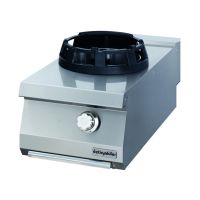
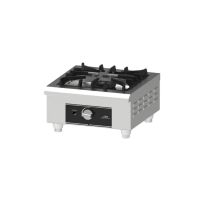
A full-size floor-standing gas range generally provides several cooking positions and may include an integrated oven or other cooking surface. A countertop burner is typically a more compact solution designed to sit on a suitable work surface or equipment stand.
Countertop equipment can be useful where only limited burner capacity is required or where a dedicated burner needs to be added to an existing line.
A floor-standing commercial gas range is more appropriate when open-burner cooking forms a central part of the kitchen's production.
Open Burners vs Integrated Griddle
Open burners provide flexibility because chefs can use different pots and pans for boiling, simmering, sautéing, and other cooking methods.
A griddle provides a flat heated surface for foods prepared directly on the plate. The correct allocation of cooking-line space depends on the menu.
Combination ranges can provide both functions when a business needs open burners and griddle cooking but wants to consolidate equipment into one station.
Planning the Number of Gas Burners
To determine the required number of burners, restaurants should examine how many pots and pans are typically in use during the busiest part of service.
If four pans are regularly cooking while another two recipes wait for space, a larger range may improve workflow. If only two or three burners are normally used, installing an eight-burner range may provide unnecessary capacity.
Planning around actual production provides a better basis for choosing between 4, 6, and 8 burner configurations.
Choosing a Gas Range According to Pan Size
Large cookware can occupy more than the theoretical space of a single burner. Two oversized stock pots placed side by side may limit access to adjacent burners even when the range technically provides several cooking positions.
Businesses should therefore consider grate dimensions and the diameter of their most frequently used cookware.
This is particularly important for catering and central kitchens that regularly use large pots.
Gas Range Dimensions and Cooking-Line Space
Commercial gas ranges are available in different widths and depths according to burner count and configuration.
For example, selected four-burner Piokit ranges listed by Kawader are approximately 610 mm wide and 790 mm deep, while larger six- and eight-burner configurations can require considerably more line space.
Always check the exact dimensions of the selected model before finalizing the kitchen layout.
Gas Range with Backsplash
Some commercial ranges incorporate a backsplash or back guard as part of their construction. This can help define the rear of the cooking station and provide a practical configuration for professional installations.
The exact design varies by model, and some ranges can also include an overshelf or other rear structure.
Buyers should review product images and technical specifications when backsplash height or overall equipment height affects the planned installation.
Commercial Gas Range Installation
A commercial gas burner stove requires appropriate installation according to the technical requirements of the selected equipment and the applicable standards at the site.
The gas supply must be suitable for the total equipment load, particularly where several gas appliances are installed on the same cooking line.
Installation should be performed by appropriately qualified professionals, and the exact gas type and connection requirements should be confirmed before commissioning.
Planning Gas Supply for a Restaurant Kitchen
The gas system should be designed around the combined requirements of all connected equipment rather than one appliance in isolation.
A restaurant may have a commercial range, fryer, griddle, charbroiler, shawarma machine, and other gas-powered equipment operating during the same service period.
The complete gas load should therefore be considered during kitchen design and installation.
Ventilation for Commercial Gas Ranges
Professional gas cooking equipment should be incorporated into an appropriate commercial kitchen ventilation plan.
The ventilation system should be designed according to the cooking equipment, heat load, installation conditions, and applicable local requirements.
Businesses planning a new kitchen should coordinate the range position with hood and ventilation design before equipment is permanently installed.
Organizing the Cooking Line Around a Gas Range
A restaurant gas range should be positioned according to the natural flow of food through the kitchen. Preparation surfaces should provide ingredients and cookware to the cooking station without unnecessary movement.
Nearby equipment may include fryers, griddles, ovens, pasta cookers, salamanders, or other appliances depending on the menu.
Enough working space should also be maintained so chefs can safely move pots and pans between cooking positions.
Gas Range with Oven for Space Efficiency
Combining burners and an oven within the same footprint can be useful when a restaurant needs both cooking methods but has limited line space.
While the burners handle pots and pans above, the oven can support compatible cooking processes below.
Before selecting this configuration, restaurants should ensure that both sections will be used frequently enough to justify combining them in one workstation.
Cleaning a Commercial Gas Range
A commercial gas cooker should be included in the kitchen's regular cleaning procedures. Spills, grease, and food debris can accumulate around burners and beneath pan supports during daily cooking.
Selected commercial ranges include removable grates and drip trays that provide access to areas requiring routine cleaning.
Cleaning should always follow the manufacturer's instructions, and equipment should be allowed to reach an appropriate safe condition before components are handled.
Cleaning Cast-Iron Grates
Removable cast-iron grates should be cleaned according to the equipment manufacturer's instructions and dried appropriately before being returned to service.
Food residue should not be allowed to accumulate indefinitely because it can make routine cleaning more difficult.
Kitchen teams can incorporate grate inspection into closing procedures so the cooking station is prepared for the following service period.
Cleaning Drip Trays and Burner Areas
Some commercial ranges include drip trays beneath the burner area to collect food and grease during cooking.
These trays should be checked regularly and cleaned before heavy accumulation develops.
Burner areas should also be maintained according to the manufacturer's instructions so food debris does not interfere with normal equipment operation.
Maintaining a Commercial Gas Cooker Burner
Commercial ranges can operate for long periods every day, so preventive inspection is important. Kitchen teams should report changes in flame behavior, ignition, controls, or other operating characteristics.
A gas cooker burner that is not operating normally should be inspected by appropriately qualified personnel rather than modified by untrained staff.
Regular servicing can also provide an opportunity to inspect gas connections, controls, burners, and other relevant components according to the manufacturer's requirements.
Gas Range Safety in Commercial Kitchens
Staff should be trained on the correct operation of the specific range installed in the kitchen. Controls, ignition systems, and safety features can vary between manufacturers and models.
Some commercial gas range configurations include features such as flame-failure protection or safety valves. Buyers should check the individual product specifications rather than assuming every model uses the same safety system.
Gas odors, abnormal flames, damaged controls, or other unusual conditions should be handled according to the business's safety procedures and inspected by qualified personnel.
Piokit Commercial Gas Ranges
Kawader offers Piokit gas cooking equipment in several configurations for professional kitchens. Available products include four-burner ranges, models with integrated ovens, and combination units incorporating burners and griddle cooking surfaces.
Selected Piokit ranges use stainless steel exterior construction, removable cast-iron grates, independent manual burner controls, and drip trays.
Because specifications differ between individual models, businesses should compare burner count, burner output, oven configuration, dimensions, and gas requirements before selection.
Mareno Commercial Gas Ranges
Mareno provides professional cooking equipment for restaurants, hotels, and commercial foodservice operations. Kawader's selection includes Mareno gas ranges in multiple configurations, including larger six- and eight-burner options and models with integrated ovens.
These configurations can be relevant to businesses building larger cooking lines where substantial simultaneous burner capacity is required.
Always review the exact technical data of the individual Mareno range because dimensions, gas output, oven type, and burner configuration can differ by model.
How to Choose a Commercial Gas Range
The correct gas cooker burner configuration should match the restaurant's menu, peak production, cookware, available space, and gas infrastructure. Choosing by burner count alone can result in either insufficient cooking capacity or unnecessary equipment occupying valuable line space.
- Menu: Identify how many dishes rely on open-burner cooking.
- Peak demand: Count the pots and pans used simultaneously during the busiest service.
- Burner count: Compare 4, 6, and 8 burner configurations according to actual production.
- Burner output: Review the technical output of each burner, not only the total number.
- Oven: Decide whether an integrated oven will improve the cooking workflow.
- Griddle: Consider a combination range if the menu requires both burners and flat-surface cooking.
- Cookware: Ensure grate size and burner spacing are suitable for the pots and pans used.
- Dimensions: Measure the available cooking-line space before ordering.
- Gas supply: Confirm gas type, connection, and total load requirements.
- Ventilation: Coordinate the range with the commercial kitchen ventilation system.
- Cleaning: Compare grate, drip tray, and surface designs for routine maintenance.
- Service: Consider preventive maintenance and technical support requirements.
Shop Gas Cooker Burners and Commercial Gas Ranges in Saudi Arabia
Kawader offers gas cooker burner and commercial range solutions for restaurants, hotels, catering businesses, central kitchens, and other professional foodservice operations in Saudi Arabia.
The available selection includes different burner configurations and equipment formats, from four-burner ranges to larger six- and eight-burner models. Businesses can also explore gas range with oven configurations and combination units that integrate open burners with griddle cooking.
When comparing a commercial gas range, consider the complete cooking process rather than burner count alone. Burner output, cookware size, oven requirements, equipment dimensions, gas infrastructure, ventilation, cleaning, and peak production all influence which range is appropriate for a professional kitchen.
Choosing the Right Gas Range for Your Kitchen
What is a gas cooker burner used for in a restaurant?
A commercial gas cooker burner provides direct heat for pots and pans used for boiling, simmering, sautéing, sauce preparation, stock production, and other professional cooking processes. Multiple-burner ranges allow several dishes to be prepared simultaneously.
Should I choose a 4 burner or 6 burner gas range?
The choice depends on peak-hour cooking requirements. A four-burner range can suit smaller operations or dedicated stations, while a six-burner range provides additional simultaneous pan capacity for restaurants with broader menus or higher production.
Are commercial gas ranges available with ovens?
Yes. Kawader's range includes commercial gas ranges with integrated ovens. These units combine open-burner cooking on the upper surface with oven capacity below, which can help make efficient use of cooking-line space.
Can I get a gas range with burners and a griddle?
Yes. Combination configurations are available that integrate open burners with a flat griddle and, on selected models, an oven. This can be useful when a restaurant requires several cooking methods within one equipment footprint.
What should I check before buying a restaurant gas range?
Check the number and output of burners, cookware dimensions, peak production requirements, external dimensions, oven or griddle requirements, gas connection, ventilation, installation conditions, cleaning design, and available cooking-line space before choosing a restaurant gas range.
-
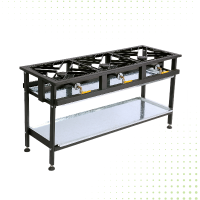
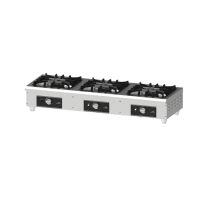 MayfairGas Countertop Range - 3 Burners From MAYFAIRSpecial Price 3,587.43 Regular Price 4,220.50
 -
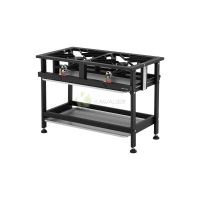
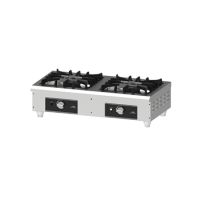 MayfairGas Countertop Range - 2 Burners From MAYFAIRSpecial Price 2,551.28 Regular Price 3,001.50