
Commercial Dishwashing Equipment for Restaurants and Hotels





Commercial Dishwashing Equipment for Restaurants and Hotels
Efficient dishwashing is essential for every commercial kitchen. Restaurants, hotels, cafés, catering companies, and institutional kitchens all rely on professional cleaning equipment to maintain hygiene standards while keeping up with continuous service. Investing in the right commercial dishwasher improves productivity, reduces labour, and ensures that dishes, glassware, and kitchen utensils are cleaned to the highest standards.
Choosing the right dishwashing system depends on your daily workload, available space, utility connections, and kitchen workflow. This guide explains the different types of commercial dishwashing equipment and how to select the best solution for your business.
Why Commercial Dishwashing Equipment Matters
Unlike domestic machines, commercial dishwashers are designed for continuous operation and rapid washing cycles. They deliver higher cleaning performance while meeting strict food safety and hygiene requirements.
Benefits of professional dishwashing equipment include:
- Faster cleaning cycles
- Improved sanitation
- Reduced water consumption
- Lower labour costs
- Higher throughput
- Consistent cleaning performance
- Better kitchen efficiency
Selecting equipment that matches your daily washing volume helps prevent delays during busy service periods.
Types of Commercial Dishwashers
Different food service businesses require different dishwashing solutions depending on the type of items being cleaned and the number of customers served.
Undercounter Dishwashers
Undercounter dishwashers are ideal for cafés, coffee shops, bakeries, bars, and smaller restaurants with limited kitchen space.
These compact machines fit beneath worktops while providing fast washing cycles for plates, cups, cutlery, and kitchen utensils.
Advantages include:
- Space-saving design
- Easy installation
- Low operating costs
- Quick wash cycles
- Simple operation
They are an excellent choice for businesses with moderate dishwashing requirements.
Hood-Type Dishwashers
Hood-type dishwashers are designed for medium to high-volume kitchens such as busy restaurants, hotels, hospitals, and catering operations.
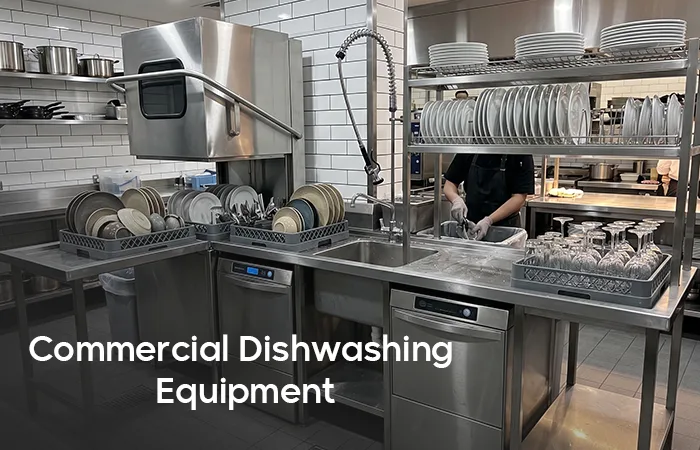
These machines allow operators to load racks on one side and unload clean dishes on the other, creating a continuous workflow that improves efficiency during peak service hours.
Benefits include:
- Higher washing capacity
- Faster workflow
- Ergonomic operation
- Suitable for large kitchens
- Easy integration with dishwashing stations
Glasswashers
Glassware requires specialised cleaning equipment to protect delicate surfaces while delivering spotless results.
Commercial glasswashers use gentle washing cycles and carefully controlled water temperatures to clean wine glasses, beer glasses, cocktail glasses, and café cups without causing damage.
Many hospitality businesses install separate glasswashers to improve workflow and prevent cross-contamination between glassware and kitchen utensils.
For a complete range of commercial dishwashers, including professional restaurant dishwashers and glasswashers and polishers, explore Kawader's commercial dishwashing solutions designed for restaurants, hotels, cafés, and catering businesses.
Rack Capacity and Throughput
One of the most important factors when selecting a dishwasher is its production capacity.
Rather than focusing only on cycle time, evaluate:
- Racks per hour
- Plates per hour
- Glasses per hour
- Peak-hour demand
- Number of daily customers
Choosing equipment with sufficient throughput helps avoid bottlenecks during lunch, dinner, and banquet service.
Hotels and large restaurants often require higher-capacity machines capable of handling continuous washing throughout the day.
Water and Power Requirements
Commercial dishwashers require appropriate utility connections to operate efficiently.
Before purchasing equipment, consider:
- Available electrical supply
- Water pressure
- Water quality
- Drainage requirements
- Hot water availability
- Energy efficiency
Selecting energy-efficient models can significantly reduce operating costs while maintaining excellent cleaning performance.
Designing an Efficient Dishwashing Workflow
A well-planned dishwashing station improves productivity while reducing unnecessary movement.
A typical workflow follows these steps:
- Collect used dishes.
- Scrape food waste.
- Pre-rinse where necessary.
- Load dishwasher racks.
- Wash and rinse.
- Dry or polish.
- Return clean items to storage.
Organising workstations in this sequence allows staff to process larger volumes with less effort.
Hygiene and Food Safety
Proper sanitation is critical in every commercial kitchen.
Commercial dishwashing equipment helps businesses comply with food safety standards by maintaining consistent washing temperatures and effective rinse cycles that remove food residues, grease, and bacteria.
Regular maintenance and correct detergent use further improve cleaning performance while extending equipment lifespan.
Choosing the Right Dishwasher for Your Business
When selecting restaurant dishwashing equipment, consider:
- Type of business
- Daily customer volume
- Kitchen space
- Utility availability
- Number of employees
- Future expansion plans
Small cafés may only require an undercounter dishwasher, while hotels and banquet facilities often benefit from hood-type systems capable of processing hundreds of racks each day.
Easy Maintenance and Long-Term Performance
Routine maintenance helps maximise the performance and lifespan of commercial dishwashing equipment.
Look for machines that feature:
- Stainless steel construction
- Easy-access filters
- Simple control panels
- Automatic cleaning programmes
- Accessible service components
Regular cleaning and preventative maintenance minimise downtime and help ensure consistent washing performance.
Why Invest in Professional Commercial Dishwashers?
Professional commercial dishwasher systems are built for demanding food service environments and offer significant advantages over residential appliances.
Commercial equipment provides:
- Faster washing cycles
- Higher production capacity
- Superior hygiene
- Greater durability
- Lower operating costs
- Improved workflow
- Consistent cleaning quality
Whether you operate a restaurant, hotel, café, or catering business, investing in professional dishwashing equipment supports smoother kitchen operations and enhances overall service efficiency.
Conclusion
Choosing the right commercial dishwasher is an important investment for any food service operation. From compact undercounter units and high-capacity hood-type machines to specialised glasswashers, every solution is designed to improve hygiene, speed, and workflow.
By selecting equipment that matches your production requirements, available space, and daily washing volume, restaurants and hotels can maintain the highest cleaning standards while improving operational efficiency and reducing labour costs.