
Hotel Kitchen and Buffet Equipment: A Practical B2B Guide




Hotel Kitchen and Buffet Equipment: A Practical B2B Guide
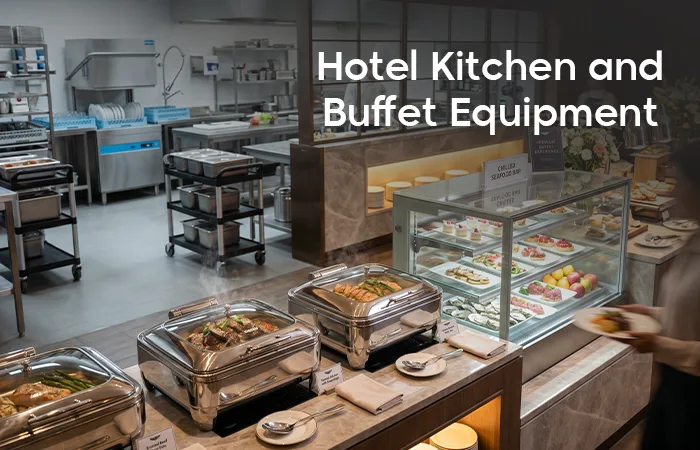
Choosing the right hotel kitchen and buffet equipment is essential for maintaining efficient service, consistent food quality, and smooth back-of-house operations. Unlike small restaurant kitchens, hotel kitchens often support multiple service areas at the same time, including breakfast buffets, à la carte restaurants, banquets, room service, staff meals, and event catering.
This makes hotel operations more demanding. The kitchen must be able to prepare large volumes of food, hold hot and cold items safely before service, move products between areas, clean large quantities of dishes, and keep buffet stations attractive throughout service hours. For this reason, hotel kitchen equipment should be selected as part of a complete operating system, not as separate machines.
In this guide, we cover the key equipment categories hotels and buffet operations need, including production equipment, hot and cold holding, warewashing, transport, service trolleys, refrigeration, freezers, and storage solutions.
Understanding Hotel Kitchen Operational Needs
A hotel kitchen usually works across several service periods and departments. The same back-of-house operation may support breakfast, lunch, dinner, conference breaks, banquets, and in-room dining. This creates a need for equipment that can handle continuous use, high production volumes, and fast service recovery.
Before selecting commercial catering equipment, hotel operators should consider:
- The number of covers served per day.
- Peak service periods, especially breakfast and events.
- The number of buffet stations or service points.
- The distance between the kitchen, buffet area, banquet halls, and service zones.
- The volume of dishes, trays, and utensils used daily.
- The mix of hot dishes, cold items, baked goods, desserts, and beverages.
- The available back-of-house space for production, storage, transport, and cleaning.
Clear planning helps prevent equipment mismatches, overcrowded kitchens, and service delays during high-demand periods.
Back-of-House Production Equipment
The production area is the core of any hotel kitchen. It must support large-batch preparation while keeping workflows organized and efficient. Depending on the hotel concept, this area may include preparation counters, ovens, ranges, fryers, grills, mixers, food processors, and refrigeration close to the workstations.
When selecting production equipment, focus on:
- Daily production volume.
- Menu variety.
- Number of service periods.
- Batch size required for buffet or banquet service.
- Ease of cleaning between shifts.
- Durability under continuous commercial use.
- Compatibility with the available kitchen layout.
Hotels should avoid selecting equipment based only on individual capacity. Instead, each piece of equipment should support the full workflow from preparation to cooking, holding, plating, and service.
Buffet Equipment for Smooth Service
Buffet service requires equipment that supports both function and presentation. Guests expect food to remain fresh, well-presented, and easy to access throughout the service period. For hotels, this means investing in buffet equipment that can maintain food quality while also supporting efficient replenishment.
Essential buffet equipment may include:
- Bain-marie units for holding hot dishes.
- Food warmers for ready-to-serve items.
- Hot displays for pastries, snacks, or prepared dishes.
- Cold displays for salads, desserts, and chilled products.
- Service trolleys for moving food and supplies.
- Serving counters and buffet accessories.
- Beverage stations for breakfast and event service.
Buffet equipment should be selected based on the number of covers, type of menu, service duration, and available front-of-house space.
Hot Holding and Food Warmers
Hot holding is one of the most important parts of buffet and catering operations. Food may be cooked before service begins, but it must remain suitable for serving during the full service period. Poor holding equipment can affect food texture, appearance, and customer satisfaction.
Hotels can use warming equipment to support buffet service, banquet preparation, and quick-service areas where food needs to remain ready for guests or service staff.
Common hot holding solutions include:
- Bain-marie units.
- Heated cabinets.
- Hot food displays.
- Countertop food warmers.
- Heated service stations.
- Holding equipment for banquet service.
When choosing hot holding equipment, consider the type of food, required holding time, ease of access, cleaning requirements, and whether the equipment will be used in the kitchen, buffet area, or service line.
Cold Holding, Refrigerators, and Freezers
Cold holding is just as important as hot holding in hotel operations. Hotels often store and serve a wide range of chilled items, including salads, desserts, dairy products, beverages, sauces, fruits, and prepared ingredients. A strong refrigeration system helps reduce waste and keeps ingredients organized.
Key cold storage and display equipment may include:
- Commercial refrigerators for daily ingredients.
- Freezers for frozen products and bulk storage.
- Display refrigerators for desserts and beverages.
- Undercounter refrigerators near preparation areas.
- Cold wells or chilled displays for buffet stations.
- Storage containers for prepared ingredients.
When choosing refrigerators and freezers, hotel operators should think about storage volume, product type, kitchen layout, delivery frequency, and ease of access during service. Cold storage should also be organized to separate raw ingredients, prepared items, and ready-to-serve products.
Warewashing Equipment for Hotels
Warewashing is a major operational area in hotels because the volume of plates, cups, cutlery, trays, pans, and service tools can be very high. A slow or poorly planned dishwashing area can create bottlenecks that affect the entire service cycle.
Hotels should consider dishwashing equipment that matches the number of covers, service periods, and banquet requirements. The right warewashing setup supports hygiene, speed, and continuous availability of clean serviceware.
A hotel warewashing area may include:
- Commercial dishwashers.
- Glass washers.
- Pre-rinse stations.
- Stainless-steel sinks.
- Sorting tables.
- Drying racks.
- Storage areas for clean dishes.
- Waste handling zones.
The dishwashing area should be separated from food preparation zones and designed to maintain a clear flow from dirty items to washing, drying, and clean storage.
Transport and Service Trolleys
Transport equipment is essential in hotels because food, dishes, trays, and supplies often need to move between the kitchen, buffet area, banquet halls, storage rooms, and service stations. Without proper transport equipment, staff may lose time and service quality may decline.
Useful transport equipment includes:
- Service trolleys.
- Tray trolleys.
- Food transport carts.
- Utility carts.
- Banquet trolleys.
- Storage racks with wheels.
- Heated or insulated transport solutions when needed.
When selecting trolleys, consider the distance between service points, load capacity, ease of movement, floor layout, and whether the trolley will be visible to guests.
Storage Equipment and Back-of-House Organization
Hotel kitchens need organized storage for ingredients, dry goods, utensils, buffet accessories, cleaning supplies, trays, and service equipment. Poor storage planning can cause delays, clutter, and difficulty tracking stock.
Important storage solutions may include:
- Stainless-steel shelving.
- Dry storage racks.
- Ingredient containers.
- Mobile storage units.
- Separate areas for cleaning supplies.
- Storage for buffet accessories.
- Dedicated space for trays and serviceware.
A well-organized storage system improves kitchen efficiency and helps staff find ingredients and tools quickly during busy service periods.
Selecting Equipment by Number of Covers
The number of covers is one of the most important factors when choosing hotel kitchen equipment. A small boutique hotel will not need the same level of production or warewashing capacity as a large hotel with banquets and multiple restaurants.
When estimating equipment needs, consider:
- Average daily covers.
- Maximum breakfast covers.
- Banquet or event capacity.
- Number of buffet stations.
- Peak dishwashing volume.
- Storage volume before and after service.
- Number of staff working per shift.
Equipment should be selected based on peak operational demand, not only average daily usage. This helps prevent delays when the kitchen is under pressure.
Common Equipment Selection Mistakes
Hotels and buffet operations may face issues after opening if equipment is selected without a clear operational plan. Common mistakes include:
- Choosing equipment based only on price.
- Underestimating the volume of buffet service.
- Not planning enough hot holding capacity.
- Ignoring cold display and refrigeration needs.
- Selecting dishwashers that are too small for peak demand.
- Not leaving enough space for trolleys and transport.
- Mixing dirty and clean workflows in the warewashing area.
- Buying equipment without considering cleaning and maintenance.
Avoiding these mistakes helps create a more efficient and reliable hotel kitchen operation.
How Kawader Supports Hotel and Buffet Operations
Kawader Store provides a range of commercial kitchen and buffet solutions for hotels, restaurants, catering operations, and hospitality projects. From food warmers and hot displays to dishwashing, refrigeration, transport, and storage equipment, hotels can select solutions that support both back-of-house production and front-of-house service.
Choosing a specialized supplier helps hotel operators plan equipment around real operational needs, including covers, service style, menu type, kitchen space, and staff workflow.
Conclusion
Hotel kitchen and buffet equipment should be selected with the full operation in mind. A successful hotel kitchen needs reliable production equipment, effective hot and cold holding, strong warewashing capacity, organized storage, and practical transport solutions.
Before purchasing equipment, define the number of covers, service periods, buffet requirements, transport routes, and back-of-house workflow. The better the planning, the smoother the service.
Explore hotel and buffet solutions from Kawader and choose equipment that supports efficient, professional, and consistent hospitality operations.