
Ice Cream Shop Equipment: Freezing, Display, and Preparatio






Ice Cream Shop Equipment: Freezing, Display, and Preparation
Opening an ice cream or gelato shop requires more than choosing flavours and designing an attractive serving counter. The success of daily operations depends on selecting the right ice cream shop equipment for freezing, display, storage, preparation, serving, and cleaning. Because frozen desserts are sensitive to temperature, texture, and presentation, every equipment decision affects product quality and customer experience.
An ice cream shop may sell scooped ice cream, gelato, soft serve, milkshakes, frozen desserts, toppings, packaged products, or takeaway tubs. Each product type has different storage and serving requirements. For this reason, equipment should be selected according to the menu, expected demand, available space, and product range.
In this guide, we cover the essential equipment needed for an ice cream or gelato shop, including gelato display freezers, storage freezers, commercial display refrigerators, blenders, scoops, ingredient containers, preparation tools, and cooling equipment.
Start with the Product Range
Before purchasing equipment, define exactly what the shop will sell. A small ice cream counter with a limited number of flavours needs a different setup from a gelato shop with a large display range, takeaway tubs, milkshakes, toppings, and cold desserts.
Your product range may include:
- Scooped ice cream.
- Gelato.
- Soft serve.
- Milkshakes.
- Ice cream cakes.
- Frozen desserts.
- Packaged tubs.
- Toppings and sauces.
- Cold beverages.
- Displayed desserts.
Once the product range is clear, it becomes easier to decide how much display space, freezer storage, preparation capacity, and serving equipment the shop needs.
Ice Cream Display and Gelato Presentation
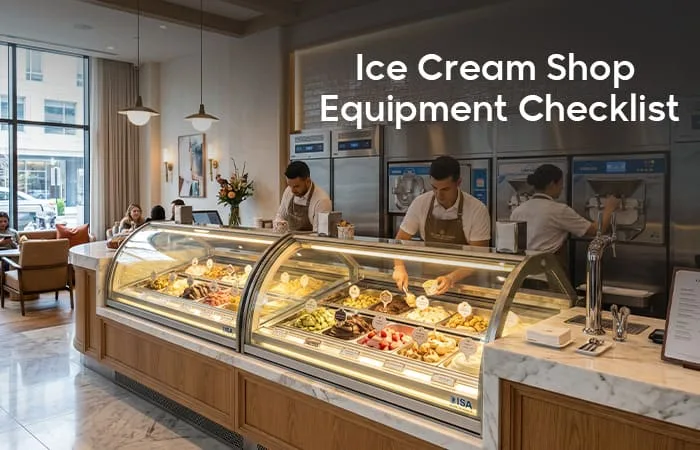
Display is one of the most important parts of an ice cream or gelato shop. Customers often choose based on what they can see, so the display freezer must keep products at the right temperature while presenting flavours clearly and attractively.
Gelato display freezers are commonly used to showcase multiple flavours while keeping them ready for service. The right display should support product visibility, easy scooping access, consistent temperature, and smooth customer flow.
When choosing an ice cream display freezer, consider:
- Number of flavours displayed.
- Pan or container capacity.
- Visibility and lighting.
- Temperature consistency.
- Access for serving staff.
- Cleaning requirements.
- Available front-of-house space.
- How often flavours are refilled during the day.
A display unit should not only look good; it must also protect texture and quality during service.
Backup Freezing and Storage Freezers
Front-of-house display freezers are not designed to hold all stock. Ice cream and gelato shops need backup freezer storage for extra tubs, prepared batches, packaged products, frozen fruit, ingredients, and stock rotation.
For frozen stock and backup storage, a suitable 2-door upright freezer or related cooling solution can help organise products and support daily replenishment from back-of-house to the display area.
When planning freezer storage, review:
- Number of flavours in production.
- Backup tubs needed per day.
- Delivery or production frequency.
- Space for packaged products.
- Separation between ready-to-serve and backup stock.
- Temperature requirements.
- Ease of stock rotation.
- Access during peak service.
A freezer that is too small can create stock pressure, while a poorly organised freezer may slow down service and increase handling time.
Ice Cream Machines and Production Needs
If the shop produces ice cream or gelato in-house, ice cream machines become part of the core production setup. Production equipment should be selected according to batch size, flavour range, daily demand, and available preparation space.
When choosing ice cream machines or gelato production equipment, consider:
- Batch capacity.
- Production time per cycle.
- Number of flavours produced daily.
- Staff skill level.
- Cleaning process.
- Ingredient handling.
- Space for cooling and storage after production.
- Whether the shop produces fresh daily or stores larger batches.
Production equipment should connect smoothly with freezer storage and display planning. After production, products must move into storage or display without disrupting temperature control or staff workflow.
Commercial Display Refrigerators
Not every product in an ice cream shop is frozen. Many shops also sell drinks, cakes, toppings, desserts, sauces, or chilled items that need refrigeration rather than freezing. For these products, commercial display refrigerators can support visibility, product organization, and front-of-house sales.
Display refrigerators may be useful for:
- Bottled beverages.
- Chilled desserts.
- Cakes and pastries.
- Toppings and sauces.
- Packaged cold products.
- Grab-and-go items.
- Complementary products near the serving counter.
When selecting display refrigerators, consider product visibility, door access, available floor or counter space, temperature range, and how often products will be restocked.
Preparation Tools and Ingredient Containers
Preparation tools help staff work faster and keep products organised. Even small tools can affect service speed, portion control, and hygiene.
Essential preparation items may include:
- Ingredient containers.
- Topping containers.
- Sauce bottles.
- Measuring tools.
- Mixing bowls.
- Spatulas.
- Storage tubs.
- Labels and date markers.
- Cleaning cloths and sanitising tools.
Ingredient containers should be food-safe, easy to clean, and suitable for the products being stored. Clear labelling also helps staff manage flavours, toppings, allergens, and stock rotation.
Scoops, Serving Tools, and Portion Control
Serving equipment plays a direct role in speed and consistency. Scoops should be comfortable to use, suitable for the product texture, and easy to clean between flavours.
Common serving tools include:
- Ice cream scoops.
- Gelato spades.
- Portioning tools.
- Cone holders.
- Cup and lid organisers.
- Topping spoons.
- Napkin and spoon dispensers.
- Takeaway tub tools.
Consistent portioning helps control food cost and creates a more reliable customer experience. Serving tools should be positioned close to the display area to reduce movement during busy periods.
Blenders for Milkshakes and Frozen Drinks
Many ice cream shops expand their menu with milkshakes, smoothies, and frozen drinks. For this, commercial blenders may be required near the preparation or serving area.
When selecting blenders, consider:
- Motor power.
- Ability to blend thick ice cream bases.
- Jar capacity.
- Speed of preparation.
- Ease of cleaning.
- Noise level.
- Counter space.
- Expected number of milkshake orders.
If milkshakes are a major part of the menu, one blender may not be enough during peak demand. Separate blending capacity can help maintain faster service.
Cooling Equipment for Shop Operations
Cooling equipment includes more than display freezers. Ice cream shops may need refrigeration and freezer solutions across both front-of-house and back-of-house areas. These units help manage raw ingredients, finished products, toppings, drinks, and backup stock.
Cooling equipment may include:
- Display freezers.
- Storage freezers.
- Upright refrigerators.
- Display refrigerators.
- Undercounter refrigerators.
- Beverage coolers.
- Ingredient chillers.
- Cold storage containers.
The right cooling setup should maintain product quality while supporting easy movement between production, storage, display, and serving.
Cleaning and Hygiene Workflow
Ice cream and gelato shops handle dairy, toppings, sauces, and products served directly to customers. Cleanliness is essential for food safety and brand reputation.
A practical cleaning workflow should include:
- Regular cleaning of display surfaces.
- Sanitising scoops and serving tools.
- Cleaning blenders after use.
- Wiping topping stations.
- Managing spills quickly.
- Labelling opened ingredients.
- Cleaning freezer and refrigerator interiors.
- Separating cleaning tools from food-contact tools.
Cleaning routines should be easy for staff to follow during service and at closing time. Equipment that is difficult to clean may slow down operations and increase hygiene risks.
Choosing Equipment by Shop Size and Demand
Equipment should match the size of the business. A small kiosk may need limited display and storage, while a full ice cream shop with many flavours needs more freezer space, serving tools, and preparation capacity.
Before purchasing equipment, estimate:
- Number of flavours displayed.
- Daily customer volume.
- Peak-hour demand.
- Number of takeaway orders.
- Quantity of backup stock.
- Milkshake or dessert menu size.
- Available front-of-house space.
- Back-of-house production and storage needs.
Planning around peak demand is especially important because ice cream shops can become busy in short time windows, especially evenings, weekends, and warm seasons.
Common Equipment Mistakes in Ice Cream Shops
Many ice cream and gelato shops face operational issues because equipment is selected without enough planning. Common mistakes include:
- Choosing a display freezer with too little capacity.
- Underestimating backup freezer storage.
- Not planning space for toppings and sauces.
- Forgetting refrigerated display for complementary products.
- Buying production equipment before defining the flavour range.
- Not leaving enough space behind the serving counter.
- Ignoring cleaning time for blenders and tools.
- Poorly organising scoops, cups, cones, and takeaway tubs.
- Selecting equipment without considering future menu expansion.
Avoiding these mistakes helps improve service speed, product consistency, and customer experience.
How Kawader Supports Ice Cream and Gelato Shops
Kawader Store provides cooling and foodservice equipment solutions for ice cream shops, gelato concepts, cafes, dessert shops, and hospitality projects. From display refrigerators and cooling equipment to storage freezers, preparation tools, and service support equipment, the right setup can help businesses maintain quality and operate more efficiently.
Working with a specialised supplier helps project owners choose equipment according to product range, storage needs, service flow, and expected demand.
Conclusion
A successful ice cream or gelato shop depends on a reliable freezing, display, preparation, and serving setup. Display freezers present flavours to customers, storage freezers support backup stock, preparation tools improve workflow, and refrigeration helps sell complementary chilled products.
Before purchasing ice cream shop equipment, define your menu, flavour range, expected customer demand, storage needs, and serving style. The right equipment plan helps protect product quality, improve staff efficiency, and create a better customer experience.
Explore ice cream and gelato equipment.