
Restaurant Equipment Purchasing Guide: From Planning to Handover




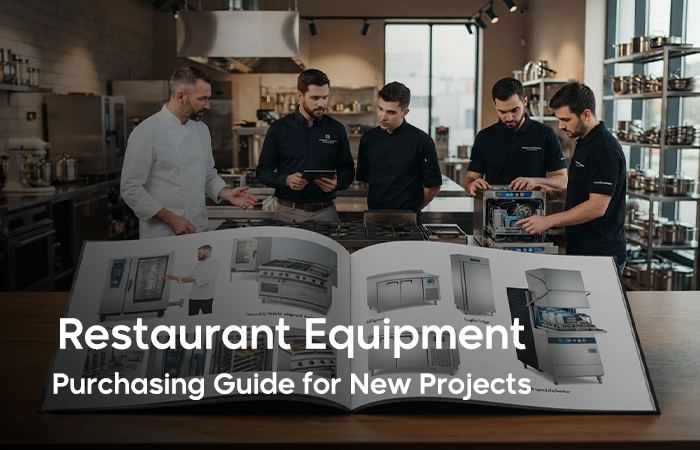
The first step in purchasing equipment is understanding what your restaurant will produce.
Equipment should be selected based on the menu, not the other way around.
Start by defining:
-
Food categories.
-
Preparation methods.
-
Cooking techniques.
-
Beverage offerings.
-
Production volume.
-
Service style.
For example:
A burger restaurant may require:
-
Grills.
-
Fryers.
-
Bun toasters.
-
Refrigerated preparation counters.
A café may require:
-
Espresso machines.
-
Grinders.
-
Ice equipment.
-
Display refrigeration.
A bakery may require:
-
Mixers.
-
Dough preparation equipment.
-
Baking ovens.
-
Cooling racks.
The menu determines the equipment requirements.
Step 2: Calculate Required Production Capacity
After defining the menu, estimate how much production the kitchen needs to handle.
Capacity planning should consider:
-
Expected daily customers.
-
Peak-hour orders.
-
Portion sizes.
-
Operating hours.
-
Future growth.
Equipment should be selected based on the busiest expected periods, not average daily demand.
Why Capacity Planning Matters
Insufficient equipment capacity can cause:
-
Longer waiting times.
-
Kitchen delays.
-
Reduced service quality.
-
Increased staff pressure.
Oversized equipment can create:
-
Higher investment costs.
-
Unused capacity.
-
Additional energy consumption.
The goal is to find the right balance between current needs and future expansion.
Step 3: Measure Kitchen Space and Plan Layout
Before purchasing equipment, review the available kitchen area.
Important measurements include:
-
Floor space.
-
Door openings.
-
Equipment dimensions.
-
Staff movement areas.
-
Storage zones.
-
Service access.
A well-designed kitchen should allow smooth movement between:
-
Storage.
-
Preparation.
-
Cooking.
-
Holding.
-
Service.
-
Cleaning.
Equipment selection must match the physical limitations of the project.
Step 4: Review Utility Requirements
Commercial equipment requires proper infrastructure to operate efficiently.
Before ordering, confirm:
-
Electrical supply.
-
Voltage requirements.
-
Gas availability.
-
Water connections.
-
Drainage.
-
Ventilation requirements.
Examples:
Cooking equipment may require:
-
Gas connections.
-
Ventilation systems.
-
Heat extraction.
Refrigeration equipment may require:
-
Correct electrical supply.
-
Adequate ventilation space.
Dishwashing equipment may require:
-
Water supply.
-
Drainage.
-
Proper installation conditions.
Ignoring utilities during planning can delay installation and increase project costs.
Step 5: Prepare a Detailed Equipment List
A complete equipment list helps organise the purchasing process and makes supplier comparison easier.
The list should include:
-
Equipment category.
-
Quantity.
-
Required capacity.
-
Technical specifications.
-
Dimensions.
-
Preferred features.
-
Installation requirements.
A professional equipment list may include:
Cooking Area
-
Ovens.
-
Fryers.
-
Grills.
-
Ranges.
-
Specialty cooking equipment.
Preparation Area
-
Food processors.
-
Mixers.
-
Cutting equipment.
-
Preparation tables.
Refrigeration Area
-
Refrigerators.
-
Freezers.
-
Display units.
-
Preparation refrigeration.
Cleaning Area
-
Commercial dishwashers.
-
Washing stations.
-
Storage solutions.
Step 6: Select Reliable Commercial Equipment Categories
The equipment categories should match the restaurant workflow.
Explore commercial restaurant equipment for professional solutions designed for foodservice operations.
Important categories include:
-
Cooking equipment.
-
Food preparation equipment.
-
Refrigeration.
-
Dishwashing.
-
Storage.
-
Service equipment.
Each category should be selected according to production requirements rather than price alone.
Step 7: Compare Technical Offers and Quotations
Receiving multiple quotations is an important part of the purchasing process.
However, quotations should not be compared only by total price.
Review:
-
Brand.
-
Model number.
-
Capacity.
-
Materials.
-
Power requirements.
-
Included accessories.
-
Delivery terms.
-
Installation details.
-
Warranty coverage.
A lower quotation may exclude important services or provide equipment with lower specifications.
Technical Comparison Checklist
Compare:
|
Factor |
What to Review |
|
Model |
Exact equipment model |
|
Capacity |
Production or storage capacity |
|
Dimensions |
Kitchen compatibility |
|
Power |
Electrical or gas requirements |
|
Accessories |
Included components |
|
Warranty |
Coverage and duration |
|
Installation |
Included services |
|
Delivery |
Timeline and conditions |
Step 8: Evaluate Refrigeration Requirements
Refrigeration is a critical part of restaurant operations because it affects food quality and storage efficiency.
Explore commercial refrigeration equipment for professional cooling solutions.
When selecting refrigeration, consider:
-
Storage capacity.
-
Temperature requirements.
-
Product categories.
-
Kitchen space.
-
Energy efficiency.
Common refrigeration equipment includes:
-
Upright refrigerators.
-
Freezers.
-
Beverage coolers.
-
Display refrigerators.
-
Preparation counters.
A well-planned refrigeration system improves organisation and reduces food waste.
Step 9: Select Dishwashing Equipment
Cleaning efficiency directly affects restaurant workflow.
Explore commercial dishwashers for solutions designed for restaurants, cafés, and professional kitchens.
Consider:
-
Number of meals served.
-
Peak cleaning demand.
-
Available space.
-
Water consumption.
-
Cycle times.
The right dishwashing equipment helps maintain hygiene standards while keeping kitchen operations moving.
Step 10: Review Warranty and After-Sales Support
Equipment support is an important part of the purchasing decision.
Before approval, confirm:
-
Warranty duration.
-
Covered components.
-
Exclusions.
-
Spare parts availability.
-
Service response time.
-
Maintenance options.
Reliable after-sales support reduces downtime and protects the investment.
Step 11: Plan Delivery and Receiving
Delivery should be coordinated with project timelines.
Before receiving equipment, confirm:
-
Delivery date.
-
Site readiness.
-
Access routes.
-
Storage area.
-
Installation schedule.
When equipment arrives, inspect:
-
Packaging condition.
-
Equipment condition.
-
Model numbers.
-
Included accessories.
-
Documentation.
Any issues should be recorded immediately.
Step 12: Installation and Commissioning
Installation is a critical stage of the purchasing process.
Professional commissioning ensures:
-
Correct operation.
-
Proper connections.
-
Safety compliance.
-
Equipment performance.
During commissioning, check:
-
Temperature settings.
-
Cooking performance.
-
Electrical operation.
-
Water connections.
-
Control systems.
Testing equipment before opening prevents operational problems later.
Step 13: Collect Equipment Documentation
Keep all important documents organised.
Documentation should include:
-
Purchase invoices.
-
Warranty certificates.
-
User manuals.
-
Maintenance schedules.
-
Installation records.
-
Service contacts.
Proper documentation helps with future maintenance and warranty claims.
Common Mistakes When Buying Restaurant Equipment
Avoid these common purchasing mistakes:
Buying Before Finalising the Menu
Equipment should support your actual production needs.
Choosing Based Only on Price
Lower prices may mean lower capacity or limited support.
Ignoring Kitchen Layout
Equipment must fit the available space and workflow.
Underestimating Utilities
Incorrect infrastructure can delay installation.
Forgetting Future Growth
Equipment should support business expansion.
Skipping Technical Comparison
Always compare specifications, not only quotations.
Restaurant Equipment Purchasing Timeline
A typical purchasing process may include:
Planning Stage
-
Define concept.
-
Finalise menu.
-
Estimate capacity.
-
Review kitchen layout.
Selection Stage
-
Prepare equipment list.
-
Request quotations.
-
Compare specifications.
Ordering Stage
-
Confirm equipment.
-
Review warranty.
-
Schedule delivery.
Installation Stage
-
Receive equipment.
-
Install systems.
-
Perform testing.
Opening Stage
-
Train staff.
-
Complete final checks.
-
Begin operations.
Tips for a Successful Equipment Purchase
Work With Experienced Suppliers
Professional suppliers can help match equipment to project requirements.
Prepare Early
Equipment planning should begin before the opening date to avoid delays.
Focus on Long-Term Value
Consider:
-
Reliability.
-
Maintenance.
-
Energy use.
-
Production capacity.
Keep Future Expansion in Mind
Choose solutions that can support business growth.
Why Choose Kawader for Restaurant Equipment Projects?
Kawader provides commercial equipment solutions for restaurants, cafés, bakeries, and foodservice projects.
From cooking equipment and refrigeration to preparation systems and dishwashing solutions, Kawader helps businesses build efficient kitchens based on their operational requirements.
A structured purchasing process ensures that every equipment decision supports productivity, reliability, and long-term success.
Conclusion
The restaurant equipment purchasing process involves much more than selecting products and comparing prices. Successful projects begin with menu planning, capacity calculations, space evaluation, technical comparisons, and proper installation planning.
By following a structured approach, restaurant owners can choose equipment that improves workflow, supports daily operations, and provides better long-term value.
Start building your project equipment list with the Kawader team and choose commercial solutions designed for your restaurant needs.