
Cloud Kitchen Equipment Guide: Build an Efficient Workflow




Cloud Kitchen Equipment Guide: Build an Efficient Workflow
Cloud kitchens, also known as ghost kitchens or delivery-only kitchens, have transformed the food service industry by allowing businesses to focus entirely on online orders without the need for a traditional dining area. While this model reduces front-of-house costs, success depends heavily on selecting the right cloud kitchen equipment and creating an efficient workflow that maximizes productivity in a limited space.
Whether you're launching your first delivery kitchen or expanding an existing operation, choosing equipment that supports speed, consistency, and future growth is essential. This guide explains how to design a practical cloud kitchen while making the best use of every square metre.
Understanding the Cloud Kitchen Model
Unlike traditional restaurants, cloud kitchens are designed exclusively for food preparation and delivery. Since customers never enter the premises, every aspect of the kitchen should focus on efficiency, order accuracy, and fast production.
The main advantages of a cloud kitchen include:
- Lower operating costs
- Smaller kitchen footprint
- Faster expansion opportunities
- Flexible menu concepts
- Greater focus on delivery efficiency
Because every minute affects delivery times, equipment selection plays a major role in overall business performance.
Divide the Kitchen into Functional Workstations
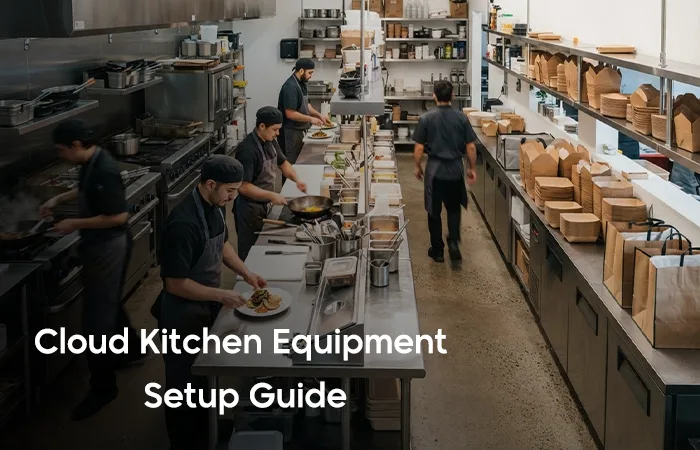
An efficient cloud kitchen is organised into dedicated workstations that reduce unnecessary movement and improve communication between staff.
A practical workflow usually includes:
- Ingredient storage
- Food preparation
- Cooking
- Holding
- Packaging
- Delivery collection
Keeping these areas organised helps reduce preparation time while improving order accuracy during busy periods.
Choose Multi-Purpose Cooking Equipment
Space is one of the biggest limitations in a cloud kitchen, making multi-functional equipment a smart investment.
Combination ovens, multifunction cooking stations, griddles, fryers, and induction cooktops allow operators to prepare multiple menu items without filling the kitchen with separate appliances.
For businesses serving different cuisines from one location, versatile equipment provides greater flexibility while reducing equipment costs.
Browse our commercial cooking equipment collection to find professional solutions that maximise productivity without occupying unnecessary space.
Maximise Space with Vertical Storage
Storage is often overlooked when planning a cloud kitchen.
Installing vertical shelving allows businesses to store dry ingredients, packaging materials, cleaning supplies, and kitchen tools while keeping valuable floor space available for food preparation.
Well-organised storage improves inventory management and helps staff locate ingredients quickly during peak service.
Undercounter Refrigeration Improves Workflow
Efficient refrigeration keeps fresh ingredients within easy reach while reducing unnecessary movement around the kitchen.
Undercounter refrigerators fit beneath preparation counters, allowing chefs to access vegetables, dairy products, meats, sauces, and beverages without leaving their workstation.
Explore our undercounter refrigerators to create compact preparation stations that improve workflow and preserve ingredient freshness.
Design an Efficient Order Flow
Cloud kitchens depend on speed and organisation.
A smooth order flow generally follows these stages:
- Receive online orders.
- Prepare ingredients.
- Cook menu items.
- Hold food at serving temperature.
- Package orders.
- Dispatch to delivery drivers.
Arranging equipment according to this sequence reduces delays and allows staff to process more orders during busy periods.
Food Holding Before Dispatch
Prepared food often waits several minutes before collection by delivery drivers.
Reliable holding equipment keeps meals at safe serving temperatures while preserving texture and quality until collection.
Browse our warming and holding equipment to find heated cabinets, holding units, and other professional solutions that help maintain food quality during delivery operations.
Packaging Stations Matter
Packaging is the final stage before an order leaves the kitchen.
A dedicated packaging station should include:
- Food containers
- Bags
- Labels
- Cutlery
- Napkins
- Sealing equipment
- Order checking area
Keeping packaging supplies organised reduces assembly time and helps minimise delivery errors.
Ventilation Is Essential
Commercial kitchens generate heat, steam, smoke, and grease throughout the day.
A properly designed ventilation system improves staff comfort, protects cooking equipment, and helps maintain a safe working environment.
When planning ventilation, consider:
- Cooking volume
- Equipment heat output
- Air circulation
- Local safety regulations
- Hood extraction capacity
Good ventilation also contributes to longer equipment life and improved kitchen cleanliness.
Plan for Future Scalability
One advantage of cloud kitchens is the ability to grow without opening additional dining spaces.
When selecting equipment, think beyond your current order volume.
Consider:
- Future menu expansion
- Additional delivery platforms
- Increased staffing
- Larger refrigeration capacity
- Higher cooking output
- Additional holding equipment
Purchasing scalable equipment today reduces future replacement costs and supports long-term business growth.
Easy Cleaning and Maintenance
Maintaining cleanliness is critical in any commercial kitchen.
Choose equipment with:
- Stainless steel construction
- Smooth food-contact surfaces
- Easy-access controls
- Removable shelves and trays
- Simple maintenance requirements
Daily cleaning and preventative maintenance improve equipment performance while helping businesses comply with food safety standards.
Why Invest in Professional Cloud Kitchen Equipment?
Professional delivery kitchen equipment is specifically designed for continuous commercial use, offering greater durability, faster production, and higher efficiency than domestic appliances.
Benefits include:
- Faster order preparation
- Better workflow
- Higher production capacity
- Reduced labour costs
- Improved food consistency
- Better energy efficiency
- Easier maintenance
Investing in quality equipment allows cloud kitchens to increase productivity while maintaining excellent customer satisfaction.
Conclusion
Building a successful cloud kitchen starts with choosing equipment that supports efficient workflows, maximises available space, and prepares your business for future growth. From multi-purpose cooking equipment and undercounter refrigeration to vertical storage, food holding, and organised packaging stations, every investment contributes to faster service and improved operational efficiency.
By carefully planning your kitchen layout and selecting reliable commercial equipment, you can create a delivery-focused operation capable of handling increasing order volumes while maintaining consistent food quality.