
Food Warming and Holding Equipment for Restaurants and Buffets


Food Warming and Holding Equipment for Restaurants and Buffets
Maintaining the perfect serving temperature is essential in every commercial kitchen. Whether you manage a restaurant, hotel, buffet, café, or catering business, serving food at the correct temperature preserves flavour, texture, and freshness while meeting food safety standards. Investing in reliable food warming equipment allows businesses to prepare food in advance, improve service efficiency, and reduce unnecessary food waste during busy operating hours.
Unlike cooking equipment, warming and holding equipment is specifically designed to keep prepared food hot until it is served. From countertop food warmers to heated holding cabinets and display units, each solution plays a unique role in ensuring consistent quality throughout service.
Understanding the Difference Between Warming and Holding Equipment
Although the terms are often used interchangeably, warming and holding equipment have different purposes.
Food warming equipment is used to gently maintain or slightly increase the temperature of freshly prepared food before it reaches customers. These units help ensure meals remain hot without continuing the cooking process.
Hot holding equipment, on the other hand, is designed to keep food at a safe serving temperature for extended periods. Rather than reheating food, these appliances preserve quality while complying with food safety requirements. Understanding this distinction helps operators choose the right equipment for their kitchen workflow.
Types of Food Warming Equipment
Commercial kitchens use a variety of warming solutions depending on the type of food being served and the style of operation.
Food Warmers
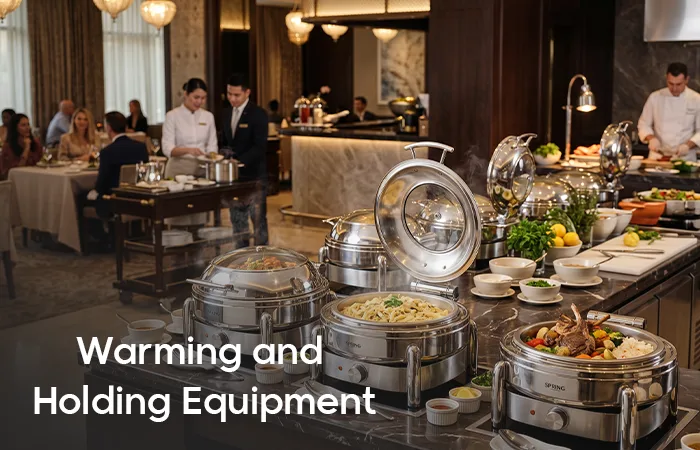
General food warmers are suitable for keeping soups, sauces, vegetables, rice, pasta, and prepared meals at serving temperature. They provide even heat distribution and help maintain moisture, making them ideal for buffet lines and self-service stations.
Fry Warmers
Freshly fried foods can quickly lose their crisp texture if not stored properly. Fry warmers are specifically designed to keep chips, fried chicken, onion rings, and similar products hot while allowing excess oil to drain away. This preserves both texture and presentation during busy service periods.
Bain-Marie Units
Bain-marie units use indirect water heating to maintain gentle and consistent temperatures. They're particularly suitable for delicate foods such as sauces, gravies, mashed potatoes, vegetables, and pasta dishes that require moisture to prevent drying out.
Heated Holding Cabinets
Heated holding cabinets are essential for restaurants, hotels, catering companies, and banquet facilities that prepare food ahead of service. These insulated cabinets maintain consistent temperatures while retaining moisture, allowing kitchens to serve large numbers of guests without sacrificing food quality.
Hot Display Units
Hot display units combine food warming with attractive presentation. They are commonly used in bakeries, cafés, convenience stores, and grab-and-go food outlets where customers can easily view ready-to-eat products while they remain at the correct serving temperature.
Heat Lamps
Heat lamps provide focused overhead heat for plated meals waiting to be served. They are widely used in pass stations, carving stations, and buffet service areas where food needs to remain hot for short periods without affecting quality.
Heated Trolleys
Heated trolleys are ideal for transporting hot food throughout hotels, hospitals, schools, and catering venues. Their mobility helps minimise heat loss while improving service efficiency across large facilities.
Choosing the Right Restaurant Food Warmers
Selecting the best restaurant food warmers depends on several important factors that directly affect food quality and operational efficiency.
Consider the Type of Food
Every menu item has different warming requirements. Fried foods perform best in fry warmers, while soups and sauces benefit from bain-marie units. Prepared meals intended for later service are better suited to heated holding cabinets, while display products require heated showcases that combine visibility with temperature control.
Look for Accurate Temperature Control
Precise temperature control is one of the most important features of professional warming equipment. Adjustable thermostats allow operators to maintain safe food holding temperatures while preventing food from drying out or overheating. Consistent temperature management also supports food safety compliance and delivers a better customer experience.
Choose the Right Capacity
Capacity should match the size and demands of your operation. Small cafés may only require compact countertop food warmers, whereas hotels, institutional kitchens, and catering companies often benefit from larger holding cabinets or multiple warming stations capable of serving high customer volumes.
Think About Mobility
Businesses that regularly transport food between preparation and serving areas should consider mobile equipment. Heated trolleys with durable wheels allow staff to move hot food safely while maintaining the correct serving temperature throughout transport.
Prioritise Food Presentation
For customer-facing businesses, presentation is just as important as temperature. Heated display cases help showcase prepared meals while encouraging impulse purchases. Glass-front displays also improve product visibility without compromising food quality.
If you're comparing different commercial solutions, explore our warming and holding equipment collection to discover professional equipment for every type of food service operation. You'll also find a premium 2-tier hot display for merchandising ready-to-serve meals and a durable heated holding cabinet designed for restaurants, hotels, and catering businesses.
Easy Cleaning and Maintenance
Commercial food warming equipment should be easy to clean and maintain. Stainless steel construction, removable trays, smooth interior surfaces, and accessible components reduce cleaning time while helping businesses maintain high hygiene standards. Regular cleaning also improves equipment performance and extends its lifespan.
Where Is Warming and Holding Equipment Used?
Food warming equipment is an essential part of many commercial food service environments, including:
- Restaurants
- Hotels
- Buffets
- Catering companies
- Cafés
- Bakeries
- School cafeterias
- Hospitals
- Supermarkets
- Institutional kitchens
Each of these businesses relies on dependable warming equipment to improve workflow, maintain food quality, and reduce waste during service.
Benefits of Investing in Quality Hot Holding Equipment
High-quality hot holding equipment offers several long-term advantages for commercial kitchens. It helps maintain safe serving temperatures, improves customer satisfaction, reduces food waste, supports faster service, and allows staff to prepare food in advance without compromising freshness. Reliable equipment also contributes to smoother kitchen operations during peak hours and helps businesses consistently deliver high-quality meals.
Conclusion
Choosing the right food warming equipment is an investment in food quality, efficiency, and customer satisfaction. Whether you need food warmers, fry warmers, bain-marie units, heated holding cabinets, hot displays, heat lamps, or heated trolleys, selecting equipment that matches your menu and service style will improve daily operations while maintaining safe serving temperatures.
Professional warming solutions not only preserve the quality of prepared food but also help businesses operate more efficiently and reduce unnecessary waste. By investing in reliable equipment, restaurants, hotels, cafés, buffets, and catering companies can deliver consistently excellent dining experiences for every customer.