
Commercial vs. Home Kitchen Equipment






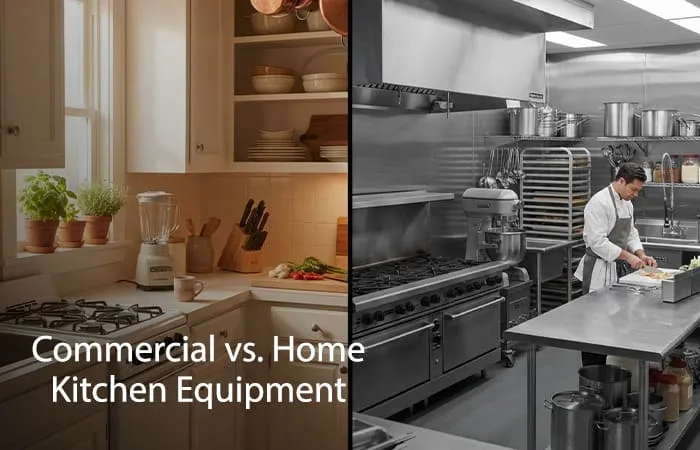
Choosing the right kitchen equipment is one of the most important decisions for any food business. Many new restaurant owners consider using home appliances as a way to reduce initial costs, but residential equipment is designed for completely different operating conditions.
While home kitchen appliances may work well for occasional cooking and small quantities, commercial kitchens require equipment built for continuous operation, higher production volumes, strict hygiene requirements, and demanding service environments.
Understanding the difference between commercial restaurant equipment and home kitchen equipment helps business owners make better purchasing decisions and avoid costly replacements, workflow problems, and unexpected downtime.
This guide explains the key differences between commercial and home kitchen equipment, including capacity, construction, operating hours, safety, cleaning, maintenance, and long-term cost.
What Is Home Kitchen Equipment?
Home kitchen equipment refers to appliances designed for household cooking and food preparation. These products are built for occasional use, smaller quantities, and shorter operating periods.
Examples include:
- Household ovens.
- Home refrigerators.
- Small mixers.
- Domestic blenders.
- Residential cooktops.
- Home coffee machines.
Home appliances are usually designed around convenience, compact size, and affordability rather than continuous production.
They are suitable for:
- Personal cooking.
- Family meals.
- Small-scale food preparation.
- Limited daily use.
However, they are not designed to handle the workload of restaurants, cafés, bakeries, or commercial kitchens.
What Is Commercial Kitchen Equipment?
Commercial kitchen equipment is designed specifically for professional foodservice environments where equipment operates frequently and handles larger production volumes.
Examples include:
- Commercial ovens.
- Professional fryers.
- Restaurant cooking lines.
- Industrial mixers.
- Commercial refrigerators.
- Food preparation machines.
- Dishwashing systems.
Explore commercial cooking equipment, commercial refrigeration equipment, and commercial food-preparation equipment for solutions designed for restaurants, cafés, and food businesses.
Commercial equipment focuses on:
- Higher output.
- Durability.
- Consistent performance.
- Faster production.
- Easier cleaning.
- Professional safety standards.
Why Home Equipment Becomes Unsuitable for Businesses
A common mistake when starting a food business is assuming that home appliances can handle commercial workloads.
A home oven may successfully bake a few items for a family, but it may struggle with hundreds of products daily. A household refrigerator may store personal groceries, but it may not provide the capacity, organisation, or temperature stability required for restaurant operations.
Home equipment becomes unsuitable when businesses experience:
- Increased order volume.
- Long operating hours.
- Frequent use throughout the day.
- Larger ingredient quantities.
- Need for faster preparation.
- Professional hygiene requirements.
The issue is not simply size. Commercial kitchens require equipment designed for a completely different level of performance.
Commercial vs. Home Kitchen Equipment Comparison
|
Feature |
Home Kitchen Equipment |
Commercial Kitchen Equipment |
|
Main purpose |
Household cooking |
Professional food production |
|
Operating hours |
Limited daily use |
Continuous operation |
|
Capacity |
Small quantities |
High-volume production |
|
Construction |
Lightweight materials |
Heavy-duty commercial materials |
|
Durability |
Designed for occasional use |
Designed for frequent use |
|
Speed |
Standard preparation speed |
Faster production capability |
|
Temperature control |
Basic controls |
Precise commercial controls |
|
Cleaning |
Household cleaning methods |
Designed for frequent cleaning |
|
Safety systems |
Basic safety features |
Professional safety requirements |
|
Maintenance |
Limited service options |
Professional maintenance support |
|
Cost of ownership |
Lower initial cost |
Better long-term value for businesses |
Operating Hours and Workload Differences
One of the biggest differences between commercial and home equipment is operating time.
Home Equipment
Residential appliances are typically used for:
- A few cooking cycles per day.
- Short preparation periods.
- Small quantities.
They are not designed for constant operation.
Commercial Equipment
Professional equipment is built for:
- Long working hours.
- Repeated cooking cycles.
- Multiple employees.
- Continuous customer demand.
For example, a restaurant fryer may operate throughout service periods, while a home fryer is only used occasionally.
Capacity and Production Differences
Capacity directly affects restaurant speed and productivity.
Home Equipment Limitations
Residential equipment may create problems such as:
- Small cooking surfaces.
- Limited storage.
- Slow preparation.
- Frequent restocking.
- Longer waiting times.
Commercial Equipment Advantages
Professional equipment provides:
- Larger cooking areas.
- Higher production capacity.
- More storage space.
- Faster processing.
- Better workflow support.
A restaurant should select equipment based on peak demand, not only average daily usage.
Construction Materials and Durability
Commercial equipment is built with stronger materials to withstand demanding environments.
Common commercial construction features include:
- Stainless-steel bodies.
- Heavy-duty components.
- Reinforced structures.
- Professional-grade motors.
- Durable internal parts.
Home appliances may use lighter materials because they are not expected to handle constant restaurant use.
This difference affects:
- Equipment lifespan.
- Resistance to wear.
- Cleaning ability.
- Daily reliability.
Safety Features and Professional Standards
Commercial kitchens involve heat, electricity, gas, sharp tools, and heavy workloads. Safety features are therefore more advanced in professional equipment.
Commercial equipment often includes:
- Temperature controls.
- Safety shutoffs.
- Protective components.
- Better ventilation compatibility.
- Safer operating systems.
Restaurants also require equipment that supports food safety practices and professional hygiene standards.
Ease of Cleaning and Hygiene
Cleaning requirements in commercial kitchens are much higher than in home kitchens.
Commercial equipment is designed with features such as:
- Smooth stainless-steel surfaces.
- Easy-access components.
- Removable parts.
- Simplified cleaning procedures.
- Resistance to heavy cleaning routines.
Examples include:
- Commercial preparation machines that can be disassembled easily.
- Restaurant refrigerators designed for frequent cleaning.
- Professional cooking equipment with accessible surfaces.
Efficient cleaning reduces downtime and supports safer food handling.
Maintenance and Warranty Considerations
Equipment reliability is essential for businesses because downtime can directly affect revenue.
Home Equipment Maintenance
Residential appliances may have:
- Limited repair options.
- Longer replacement periods.
- Fewer commercial service solutions.
Commercial Equipment Maintenance
Professional equipment usually offers:
- Specialist servicing.
- Replacement parts availability.
- Preventive maintenance options.
- Longer operational support.
Although commercial equipment may require a higher initial investment, proper maintenance can extend its working life significantly.
Total Cost of Ownership
The cheapest option at purchase is not always the most affordable long-term solution.
Using home equipment in a business can lead to:
- Frequent breakdowns.
- Production delays.
- Replacement costs.
- Lower productivity.
- Increased labour requirements.
Commercial equipment may cost more initially but often provides:
- Longer lifespan.
- Higher output.
- Better efficiency.
- Reduced operational interruptions.
Businesses should consider total cost over the equipment’s useful life rather than only the purchase price.
Examples: When Commercial Equipment Is Necessary
Restaurants
Restaurants require commercial equipment because they need:
- High cooking capacity.
- Reliable refrigeration.
- Fast preparation.
- Consistent production.
Cafés
Cafés need professional solutions for:
- Coffee production.
- Beverage preparation.
- Refrigeration.
- Display.
Bakeries
Bakeries require commercial equipment for:
- Dough mixing.
- Baking.
- Storage.
- Product display.
Catering and Central Kitchens
High-volume operations require:
- Industrial production capacity.
- Large storage.
- Heavy-duty preparation equipment.
Choosing the Right Commercial Equipment for Your Business
Before purchasing equipment, consider:
Menu Requirements
Identify the products you will prepare and the cooking methods required.
Daily Production Volume
Estimate:
- Orders per day.
- Peak-hour demand.
- Ingredient quantities.
- Preparation workload.
Kitchen Space
Measure:
- Available floor area.
- Equipment placement.
- Workflow paths.
- Ventilation requirements.
Future Growth
Choose equipment that can support expansion instead of only current demand.
Common Mistakes When Choosing Kitchen Equipment
Avoid these mistakes:
- Using home appliances for commercial production.
- Choosing based only on initial price.
- Ignoring future growth.
- Underestimating workload.
- Buying equipment without planning kitchen layout.
- Ignoring maintenance requirements.
The right equipment decision should support daily operations and long-term business goals.
Buyer Checklist: Commercial Equipment Selection
Before purchasing commercial equipment, review:
Performance
- Can the equipment handle your production volume?
- Is it designed for professional use?
Capacity
- Does it match peak demand?
- Is there room for future growth?
Durability
- Are materials suitable for heavy use?
- Is maintenance available?
Workflow
- Does the equipment improve kitchen efficiency?
- Is placement practical?
Operating Cost
- Energy consumption.
- Cleaning requirements.
- Maintenance needs.
Why Choose Kawader for Commercial Kitchen Equipment?
Kawader provides professional equipment solutions designed for restaurants, cafés, bakeries, and commercial food businesses.
From cooking systems and refrigeration to preparation equipment, Kawader helps businesses choose reliable solutions based on their menu, production volume, and operational requirements.
Whether you are opening a new restaurant or upgrading an existing kitchen, investing in commercial equipment helps create a stronger foundation for efficient daily operations.
Conclusion
The difference between commercial and home kitchen equipment goes far beyond size. Professional equipment is designed for higher workloads, longer operating hours, better durability, improved safety, and easier maintenance.
While home appliances may appear less expensive initially, they often cannot support the demands of a commercial food business. Choosing the right commercial equipment helps restaurants, cafés, and foodservice operations improve productivity, maintain quality, and reduce long-term operating challenges.
Explore commercial equipment suited to your business operations and build a professional kitchen designed for reliable performance.